Broken hand to pray with (excerpt seven)

bus
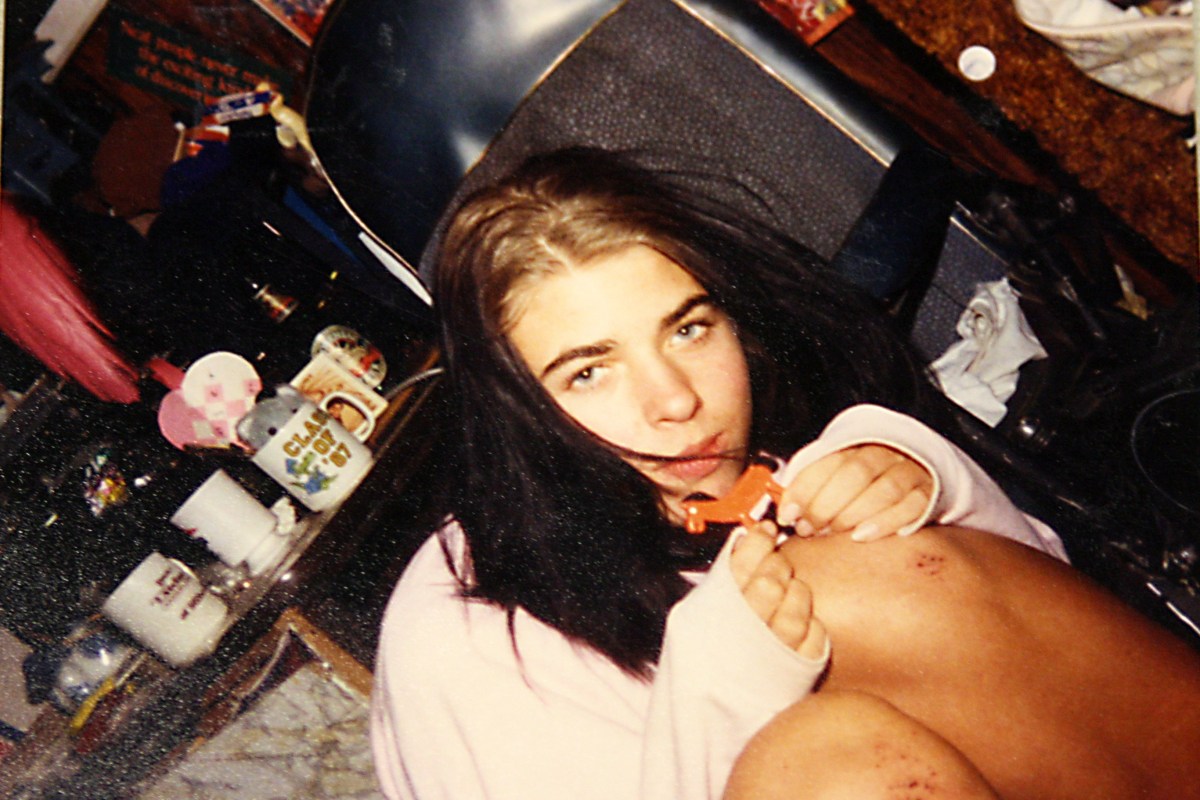
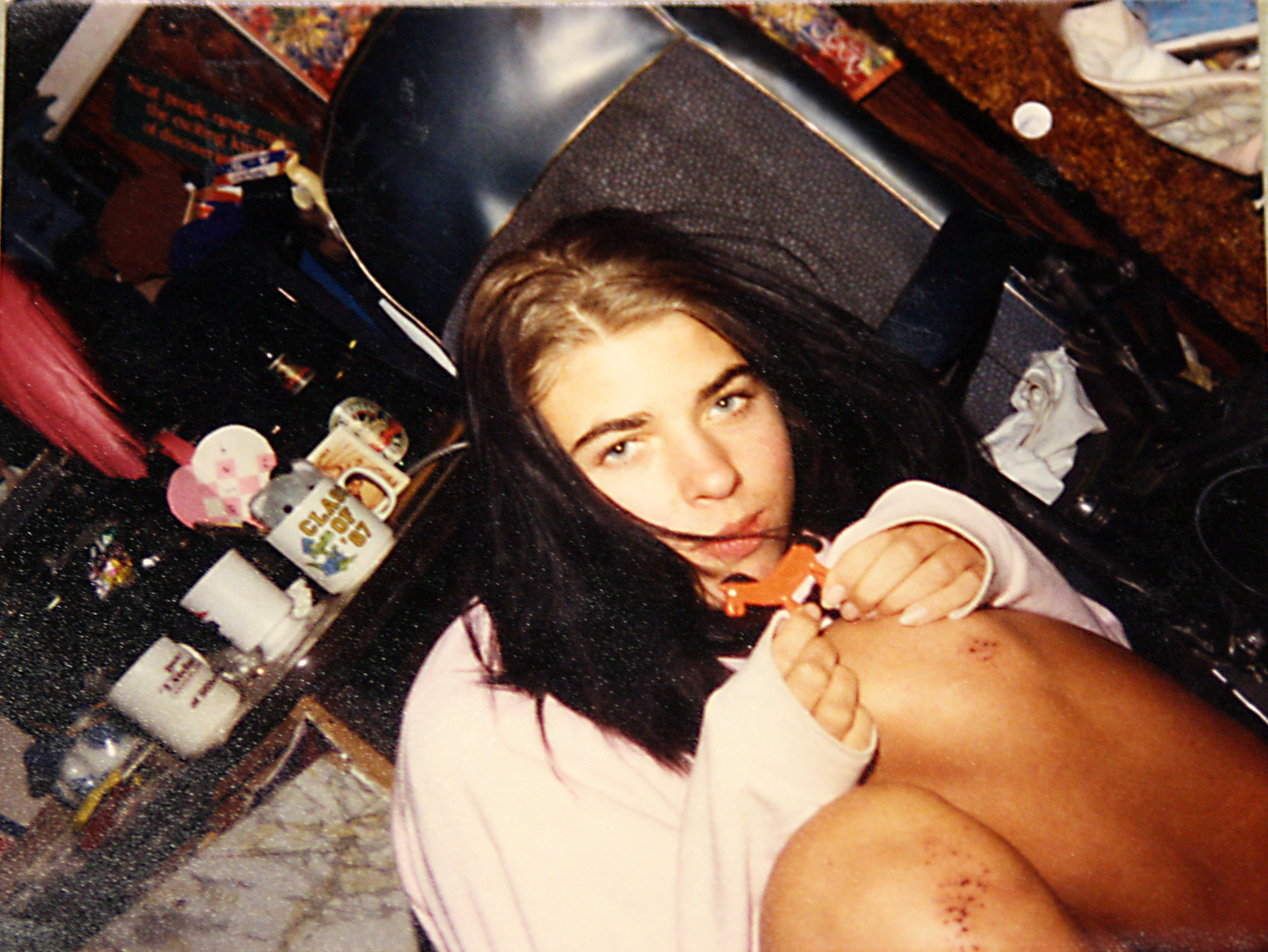
Me in the bus with my friend Pokey. You can see the blue captain’s chair behind me.

I returned from Europe and moved to Santa Cruz, California, in 1988 where I could rent my brother’s school bus as a place to live. I was nineteen.

The school bus was a model from the late 1960s. The seats were taken out and the inside was redone with shelves and a counter. A blue captain’s chair toward the back offered seating.

I went in and out of the bus through the emergency door at the back of the bus. It served as my front door. When I opened the door, a whiff of kerosene and storage shed smell greeted me, with a top note of dank mold.

The bus was parked in the Santa Cruz mountains, in an area called Lompico.

Mountains are known for being slanted. The mountain this bus was parked on was no exception. The back of the bus was the lowest part. The bus slanted upward toward the front. When I say I climbed through the back of the bus, I really did need to climb.

I didn’t much use the front of the bus because it was filled with my brother’s storage. He had boxes stacked up thick so it was impossible to get up where the driver’s seat was.

The bus came with electricity, supplied from a very long orange extension cord running from the house. I had to chose what I wanted to plug in because it only had two slots.

I could have my lamp on and my music, an 8-track player. Or I could have my typewriter and my lamp.

For music, I had two 8-tracks. One was Simon and Garfunkel, the other was the soundtrack to A Clockwork Orange.

I had a rule about dancing in the bus. Whenever Cecelia came on the 8-track player, it was time to dance. It didn’t matter who was over, or if I was by myself. That song was a cue to get up and dance.

I developed a dance style unique to the bus. Because I was a six-foot-tall woman and the bus roof was six feet high, I could only stand and dance with my knees bent and my feet spread.

For heat, I used a kerosene heater. Even when the heater wasn’t burning, the bus smelled of kerosene.
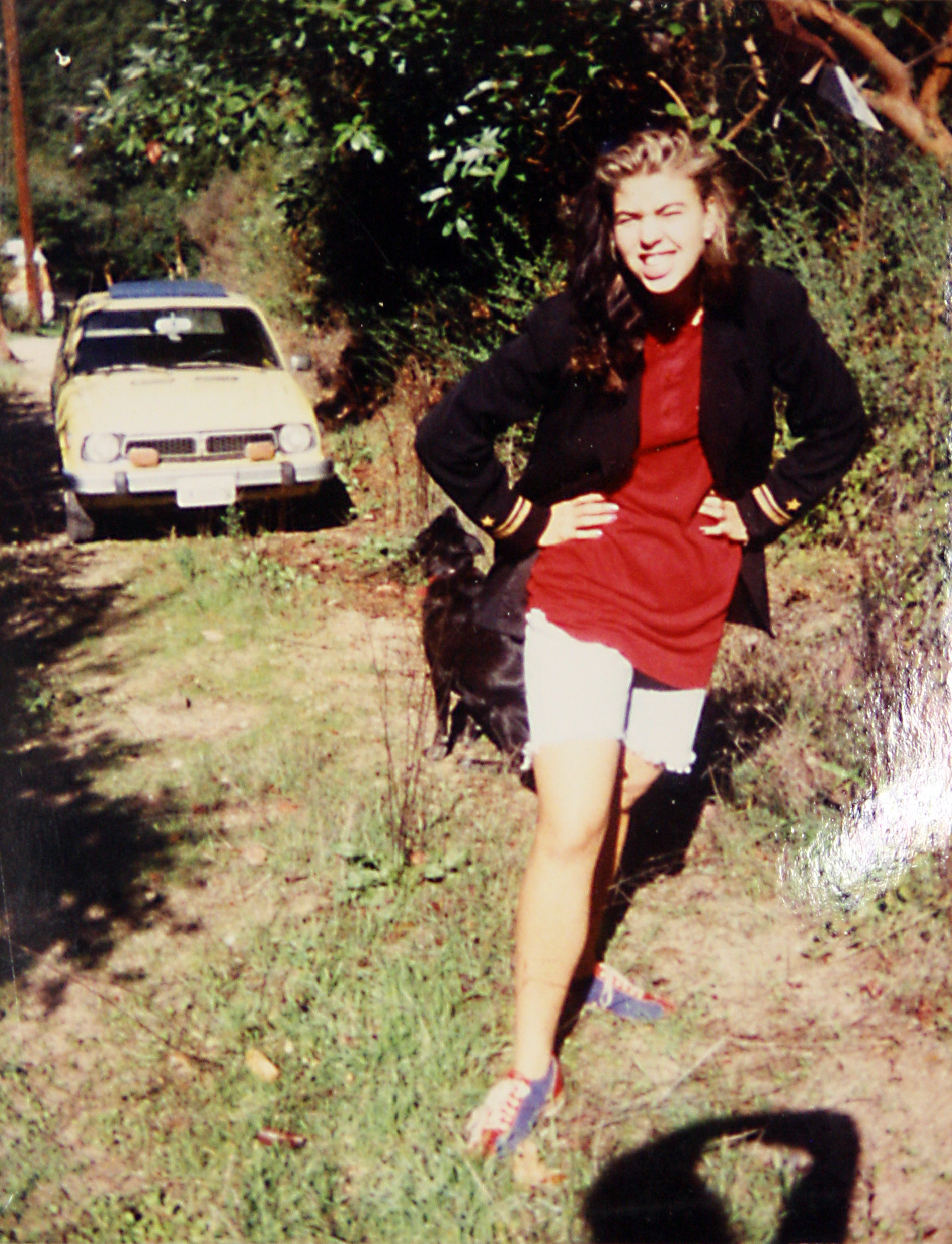
My "I live in a bus" fashion style.
My “I live in a bus” fashion style.

My bed was on the roof of the bus. A hole had been cut in the roof and a small structure, just large enough for a queen-size mattress, was built out of fiberglass and plywood.

I didn’t have an actual mattress. I had an old four-inch thick piece of foam with a large piece of brown fake fur on top to use as a bed. The foam had seen better days. Possibly in the 1970s. It had gone from being soft to being hard and crumbly. The foam crumbs stuck in the long brown fur of my bed and in my hair.

My process for going to bed was simple. I twisted the wick on the kerosene heater until the flame went out. I turned off the lamp.

There was no ladder to get up on the top level. I put a wooden crate on its small end so I had the maximum height from the crate. I stood up on the top of the crate so my hands could reach the metal rooftop.

Then I jumped off the top of the crate to get enough momentum to push myself up to the top of the bus roof and crawled on top of the fur-foam bed. The structure was three feet high, so I couldn’t sit up. I had to stay low.

In the morning, I repeated the process, dangling over the sharp metal roof edge until my feet found the top of the crate.

The worst was when a vigorous jump at night toppled the crate over. It meant a morning drop where I tried to land on my feet without getting caught on the fallen over wooden crate.

I often slept in my clothes. The damp cold that settled in the redwoods surrounding the bus pervaded the metal bus skin, plywood and fiberglass.

I dressed in layers and usually in black. A typical outfit would be black leggings, a black skirt, a purple tank top and a ribbed black wool sweater with black suede on the shoulders. For shoes, I had black wingtips.

I was growing my hair, still black from London, from a bob to past my shoulders. I often got twigs caught in it. It suited my style as a woman who lived in a bus in the Santa Cruz mountains.
Broken hand to pray with (excerpt six)

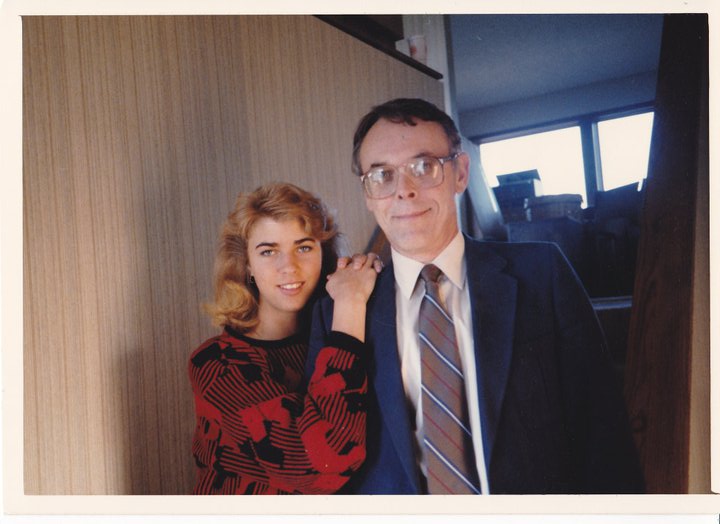
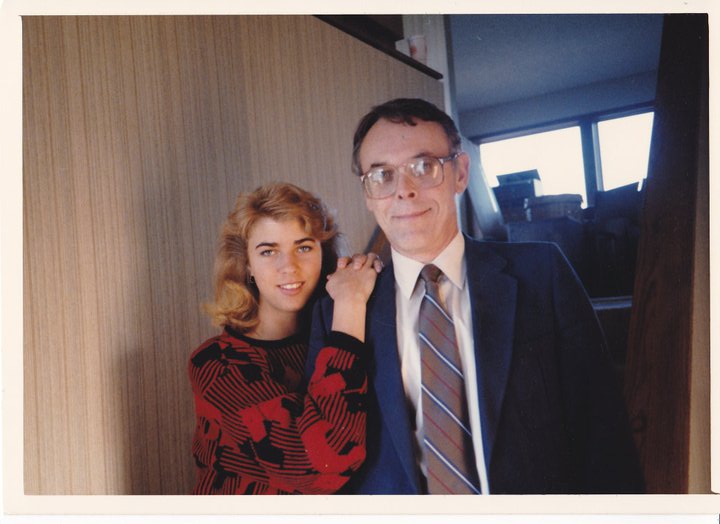
Gen and DadI’m putting my writing hours into the memoir so this month I’ll post raw excerpts from what I write. We’ll return to our regular blog posts in August.

Today’s excerpt is from high school, not the happiest of times for me, as you’ll see. I welcome your feedback and appreciate your support! Thank you for hanging with me as I tell my story—sad, ugly and trying as it was at times.

Broken hand to pray with (excerpt six)

High School Christians

There were those in high school who wore clean clothes and started a bible study group together. They stood smooth and uptight. They wrote one another notes with bible verses and words of encouragement. They went on mission trips that seemed like glorified vacations where they could bulk up their do-gooder resumes.

I was not part of this group.

Their problems seemed trivial to me, something to confess to one another as weakness but nothing too gritty or scary. This one had argued with her sister. Another envied her friend’s car.

“We’re all sinners,” they said but in the way that left no doubt that some–like me–had more sinnerness than others.

Their saccharin attitudes alarmed me.

Christians, I decided, were fake, sugary mouth-talkers. They acted earnest but were meaner and more judgmental than anyone. They made it clear that they knew who was saved and who was going to hell. By an amazing coincidence or convenience, they were the ones who were saved. Their teaching about loving your neighbor seemed conditional. Love your neighbor unless she is too weird, slutty or badly dressed to be loved. In that case, talk about her.

They smiled as they took out their words to cut people down to size. They looked down on me, living in sin with a boy, and gossiped about our relationship.

“They’re fornicators,” one said in a whisper to the other when my boyfriend and I walked by hand-in-hand. Then she looked up and caught my eye. “Hi!” she said with a bright smile and embarrassed look.

Go fornicate yourself, I thought.

I felt outside of them.

I would never be so clean. I would never fawn over my daddy and want to be like my mom. I wouldn’t know when was the right time to wear white shoes.

I would never belong. I would never feel so sure of my place as God’s favorite, so secure in my supremacy.

They seemed to own God, part of a group who lived in an illusion, the Youthful Christian Club where I wasn’t welcome. They shook their head when they looked at me.

I answered their disapproval with tighter clothes and deepened my kisses with my boyfriend in the hallway. I pressed my tall litheness on his long muscular form against the lockers. I kissed him hard to dismay the Christians and their prissy sensibilities.

Even with my eyes closed, I could hear them tutting as they walked by.

Pleasure, distraction and obsession became my religion. My only focus was my boyfriend and how I could keep him. I was possessive, jealous and crazy. Trying to tame the violence and lust of a strong eighteen-year-old boy was a full-time occupation. I was crushed when he flirted with other girls and furious when he passed out in the afternoon from too much mid-day partying.

His temper made holes in the walls where he punched next to my face. Flecks of drywall scattered through my permed blond hair. I swore I would end it the next time he punched me or kicked me. Yet each time it happened, I felt I deserved it.

How could I live without him? I didn’t want to live alone. I couldn’t live alone. I could barely live.

It was hard to breathe.

Every day was chaos.

In the swirl of drugs, liquor and an abusive relationship, I continued to live on my own, go to high school and work at my job. I consider this fact proof of God’s grace in my life despite my lack of membership to any visible group of Christians.

I didn’t die. No matter how bruised, bloated and bewildered I was, by God’s grace I kept going.

My life in writing

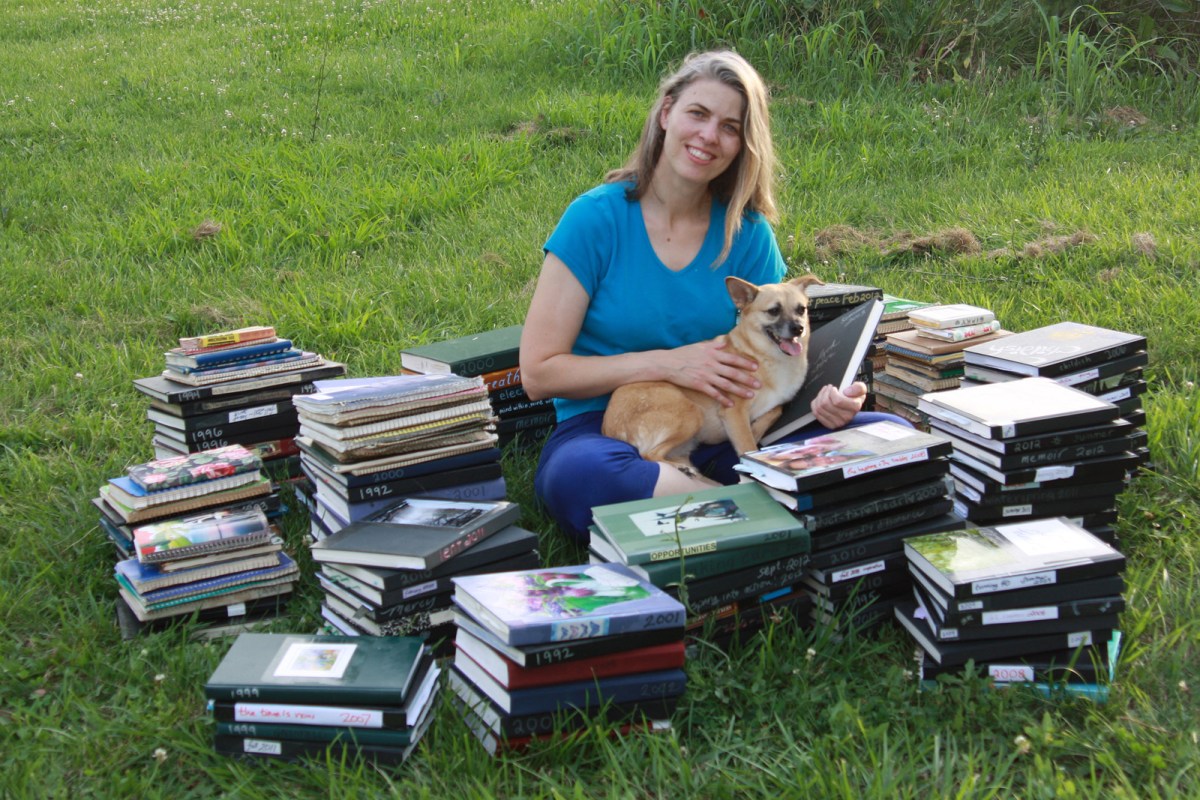
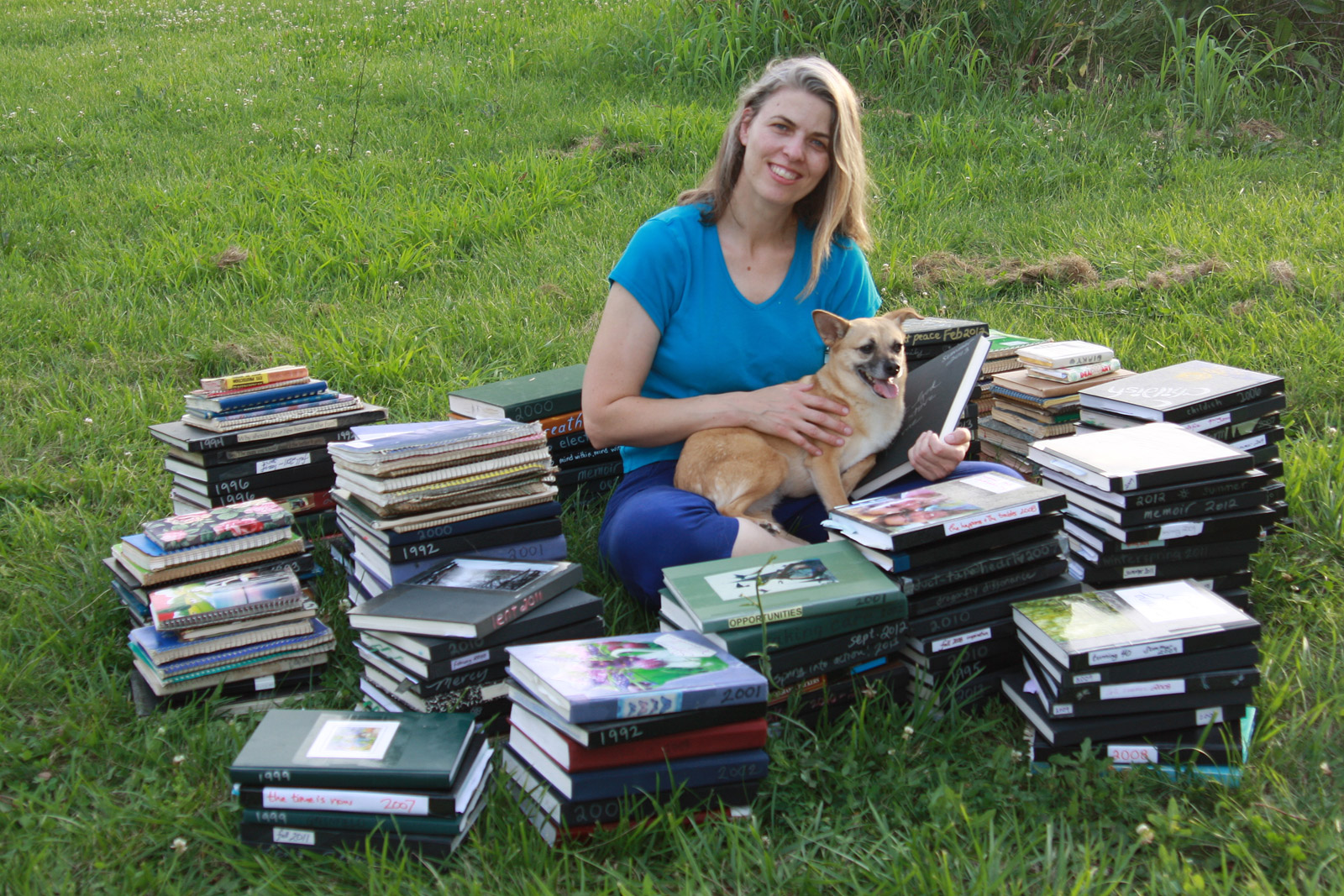
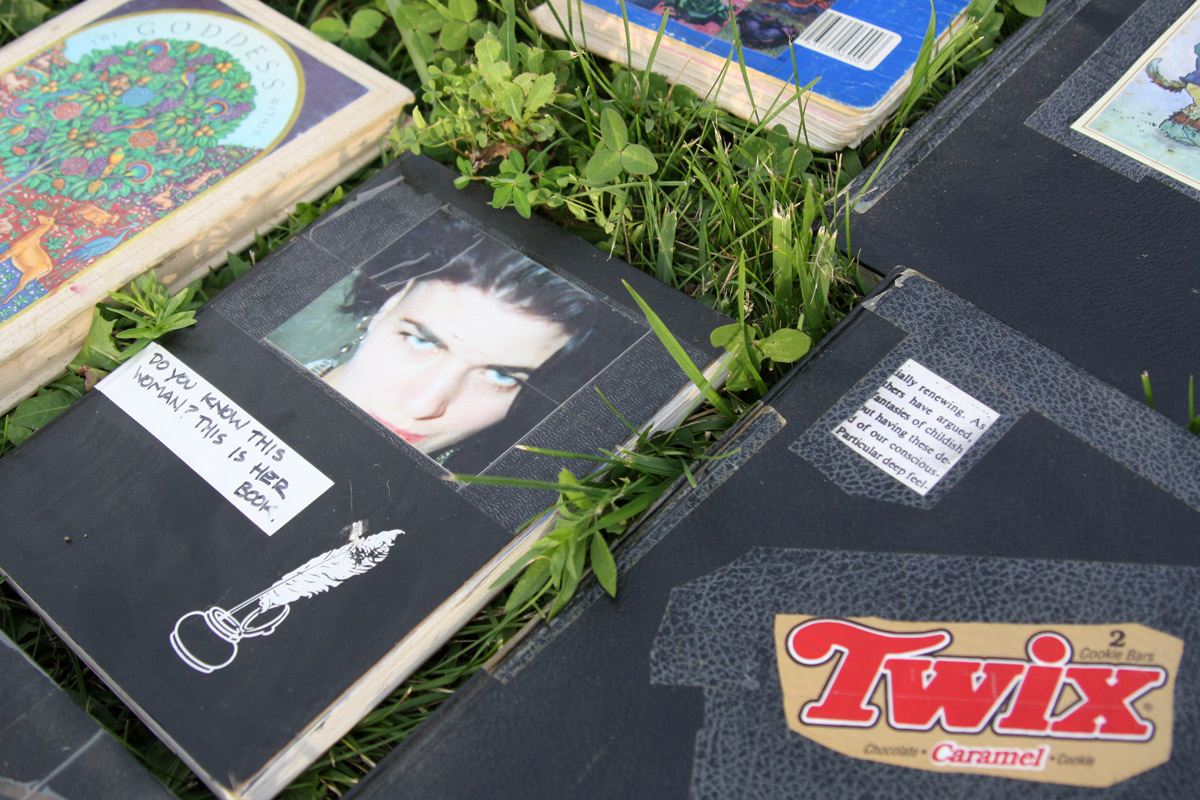
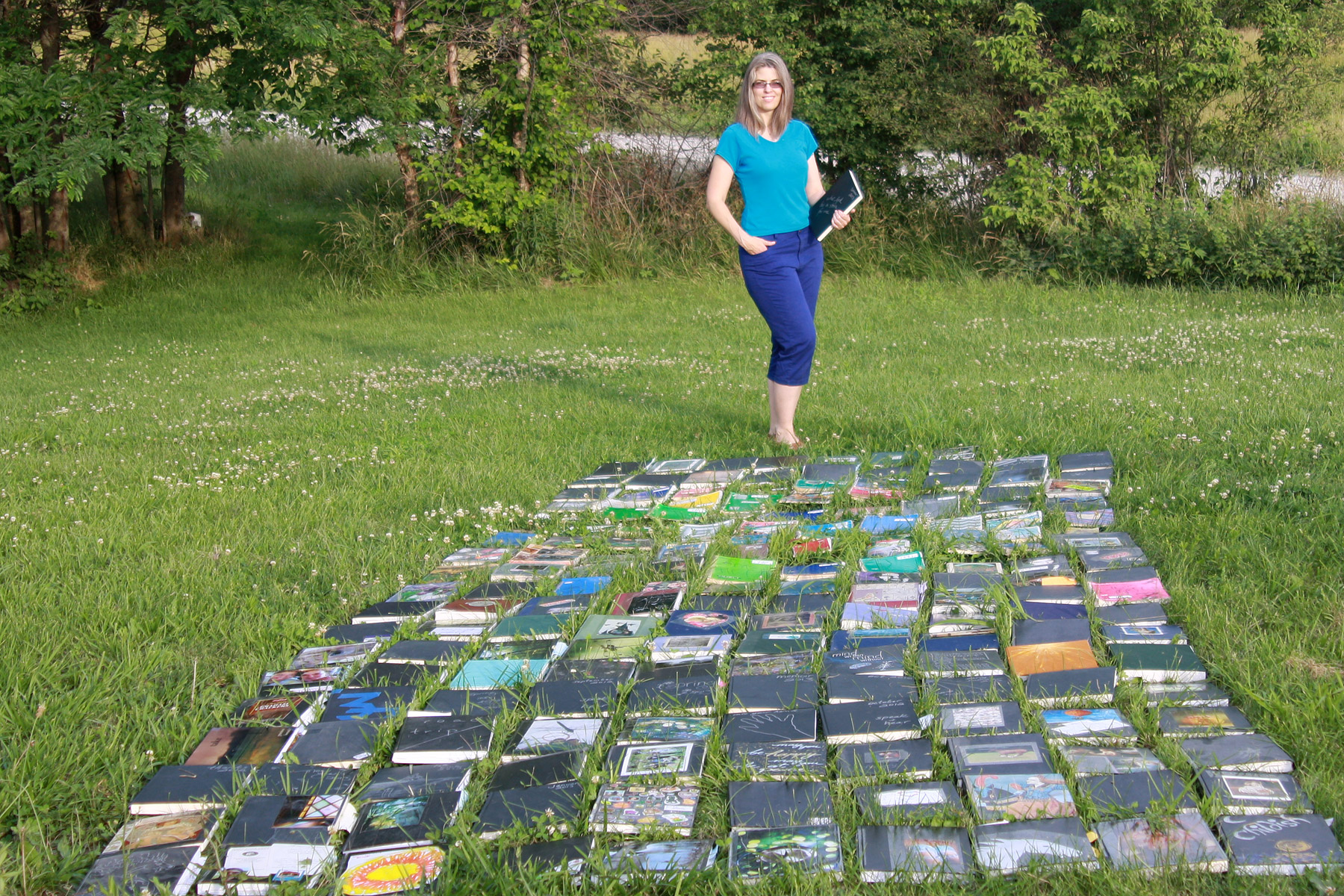
stacksFriends ask why I write and my short answer is, “Because I have to.”

I’m on my 190th journal now.

My journals are white fields where my mind can gallop until I’m exhausted and ready to rest. I write as fast as I can to get all the thoughts out. As written words, they look more harmless that they seemed swirling in my head. I write as a way to find peace in the midst of so much mental activity.

My journals are whale baleen that take in mouthfuls of life and sift out phrases that grow into poems. I find one line I like out of many pages and write from there. I write to create.

My journals are a grand junkyard where I dump all my worries. Later I wander through. I find insight, treasure…and useless fragments. The journals are my own personal Antiques Roadshow. I write as a way to gain perspective.

My journals are one long prayer to God. I write as a spiritual discipline.

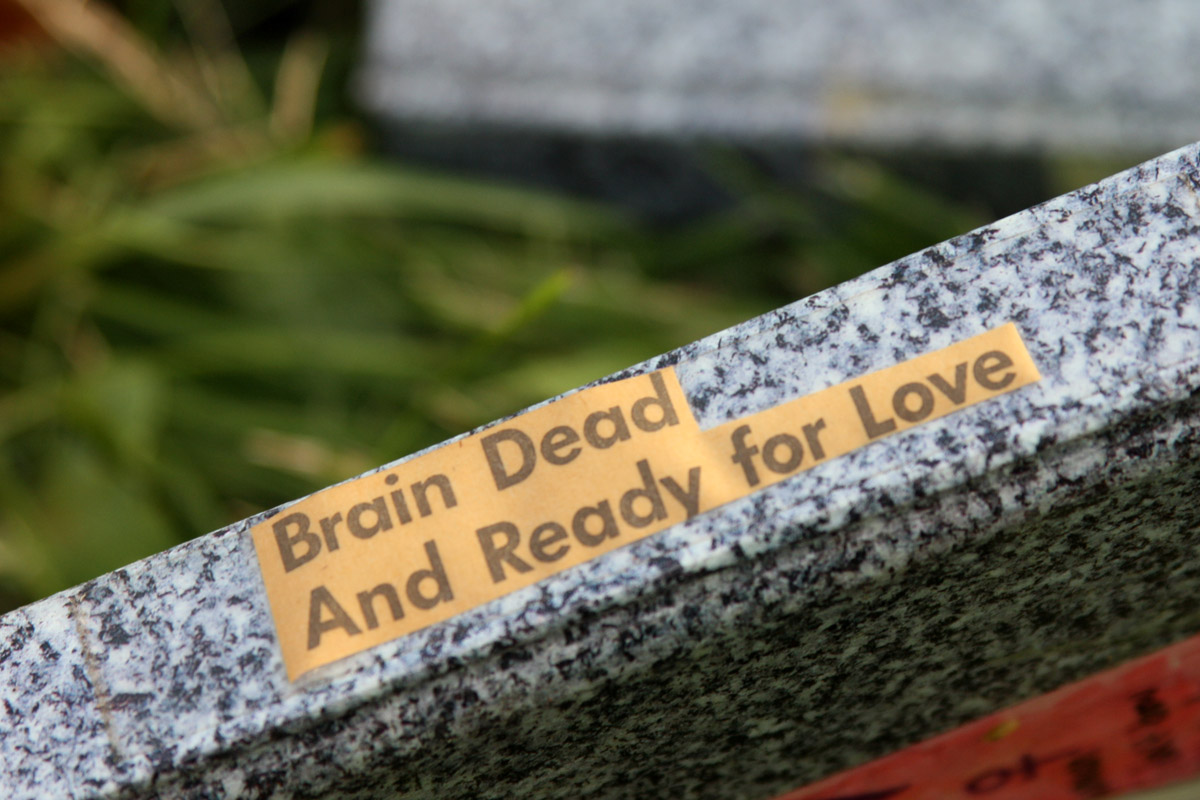
journals-close-upIf you keep a journal, I’m glad! Let me know about your experience in the comments. If you want to start a journal, go for it! Find the time that works for you. For me, I write in the evening before bed. My sister’s writing time is in the morning. What matters is that you make the habit. If you start a journal and then stop, that’s OK. Your journal entries will accumulate over your lifetime. Even if you only write once a year, you and your loved ones will be glad for a glimpse of you through time.

Next month, I’ll be part of Camp Nano, adding 10,000 more words to my memoir. If you’d like to sign up, there’s still time.  You’ll see my excerpts in July and then we’ll return to regular blog posts in August.

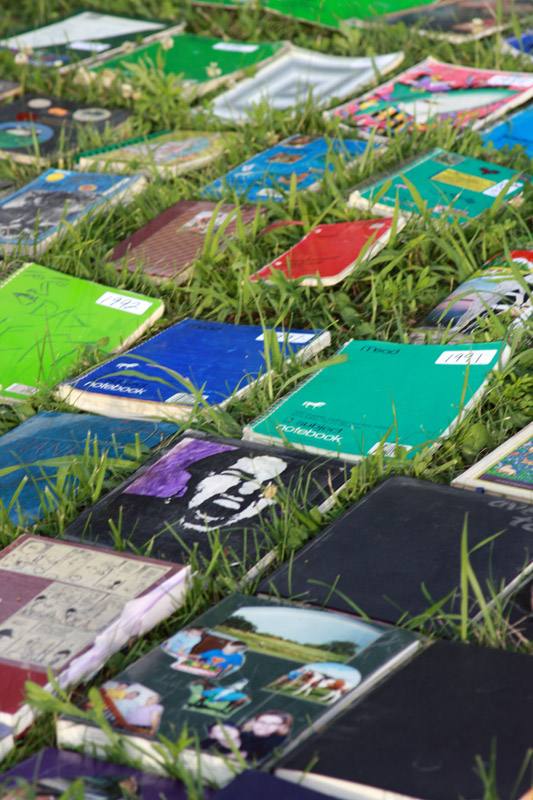
Here is a look back through my life, as seen through six of my journals. Enjoy!

Jan. 21, 1988, age 18

spineI’m really happy about my French lecture test grade. I think it’s good to push myself. I can do more and I know it. I like being here [at the University of Minnesota] and having a lot to do. It’s interesting stuff. It would be so boring to sit and rot at some desk job somewhere. I’ll really like being a teacher. I’ll always have papers and I’ll be able to think up things for my classes to do. I want to remember when I’m older to stay creative. I never want to just sit and watch TV. Hopefully my kids won’t either.

Sometimes I miss the Gen of younger days because we were simpler. Not that life has ever been simple or that we were happy then; we weren’t. High school was miserable. It’s just sometimes I wish I had 18-year-old problems instead of 22-year-old ones. Everyone has always thought me older than I am. I’ve always been so mature and responsible. I wish we could just have fun.

Our childhood is over and now we can only look back on it. It’s not so bad being an adult. I just miss the innocence and trust only the young can have. Now I know about stealing and seedy places and poverty and greed—all these evil things have touched my life and made me sadder and colder. I don’t want it to be that I’m 40 years old with nothing but empty bitterness.

March 13, 1993, age 23

womanA creamy brown and white pigeon just fell on me. Is this an omen? The metro [bus station] smells bad. I’m watching a pink girl play. Children! Kids! I dream of having my own. The pigeon is still underneath my bench. I hope it’s OK. I wonder what happened. Pigeons don’t usually fall on people waiting for their bus. At least, I’ve never experienced it before.

May 2, 1998, age 28

If our house reflects my state of mind, then I have a lot of dirty laundry in my brain.

The baby’s sleeping. It may seem like that’s always the case since that’s how it is when I write in here. He is such a joy. His smiles, his laughs even when he doesn’t know why it’s funny but he laughs with us because we’re laughing, his hands reaching out to us. I am so happy to be with him all the time.

Sept. 18, 2001, age 32

journalsI love the cool weather because it means I can bake and make soup and drink hot drinks all the day long, all the livelong day. And into the evening too. All night if I wanted. In fact, I could do nothing but bake, drink tea and stir soup if that was my heart’s desire, except for tending to my son’s needs which still include butt-wiping, helping dress and hugging. Just general attention.

Each Lego thing he builds, he asks, “Do you like my _____?”

“Yes,” I answer.

Then the more difficult, “Why?”

He’s building 40, 50, 60 different Lego things so I’m not always creative in my explanation for why I like it. Sometimes I resort to, “It’s fun.”  “You built it.” “I’ve never seen a ______ like that before.”

Now I am blowing up a purple balloon to be “superbig.” You can see how realistic my baking/tea-drinking/soup-making fantasy is. I can hardly write a few words without interruption. The balloon is really big. It’s bigger than the journal.

March 2, 2008, age 38

10 years ago I would have prayed for the problems I have today.

Feb. 2, 2013, age 43

God bless this pen, a gift from a friend who saw me in tears,
who gave me what she had, an ordinary object but could
contain ink and good wishes.

God bless this pen, a gift from a friend and bless this page,
bless its open hand, its white palm turned up to receive and
it catches all the words like tacks. They rest harmless and
no longer pinned in my mind.

God bless this page and its open hand and
bless this time, make my voice strong and
if it cannot be strong,
bless its weakness, and
if it cannot be weak,
bless all those with silent voices.

Bless the pen, the page and the voice.
Bless this time together.

Broken hand to pray with (excerpt five)

Memoir update

newtGood news! I reached my goal for 25,000 words in April toward the memoir. My two writing friends also reached their word count goals.

This go-round, I used Scrivener writing software (free trial from Literature and Latte) to lay out the book before I wrote. Wow! It was a world of difference to have an outline and a plan before I wrote.

I wrote about half the speed I did in November. It could take me hours and four cups of tea to get to 1,000 words. It might be the difference between free writing (November-style) vs. writing something another person can make sense of (April-style) but I’m happy with what I have from both times.

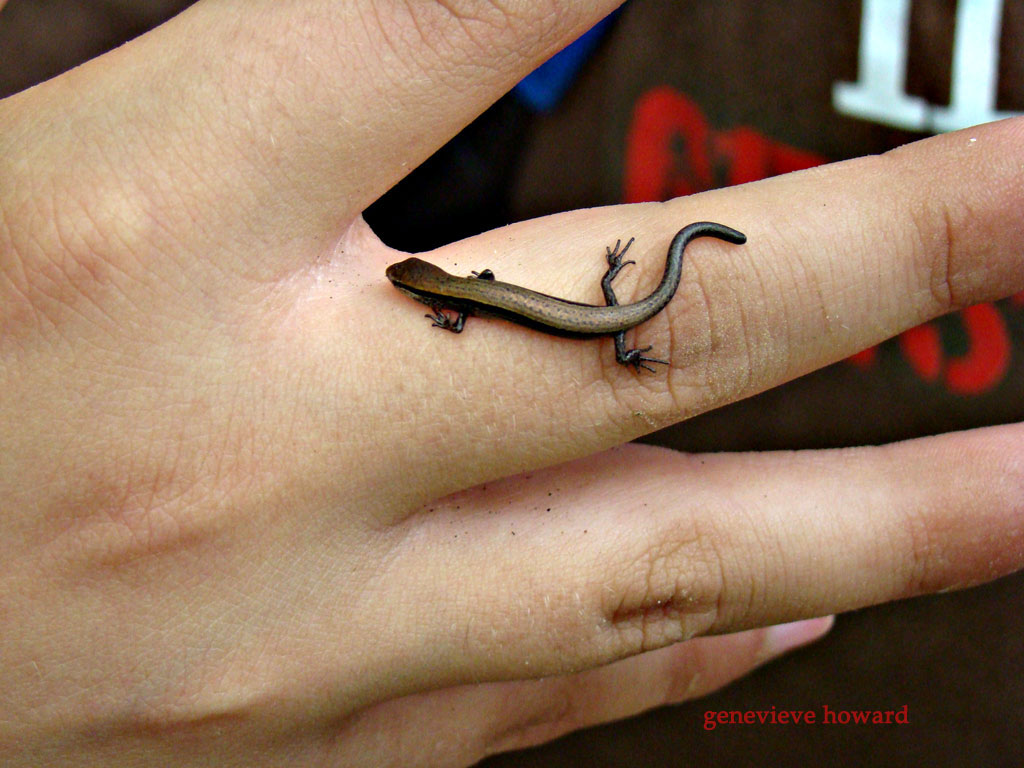
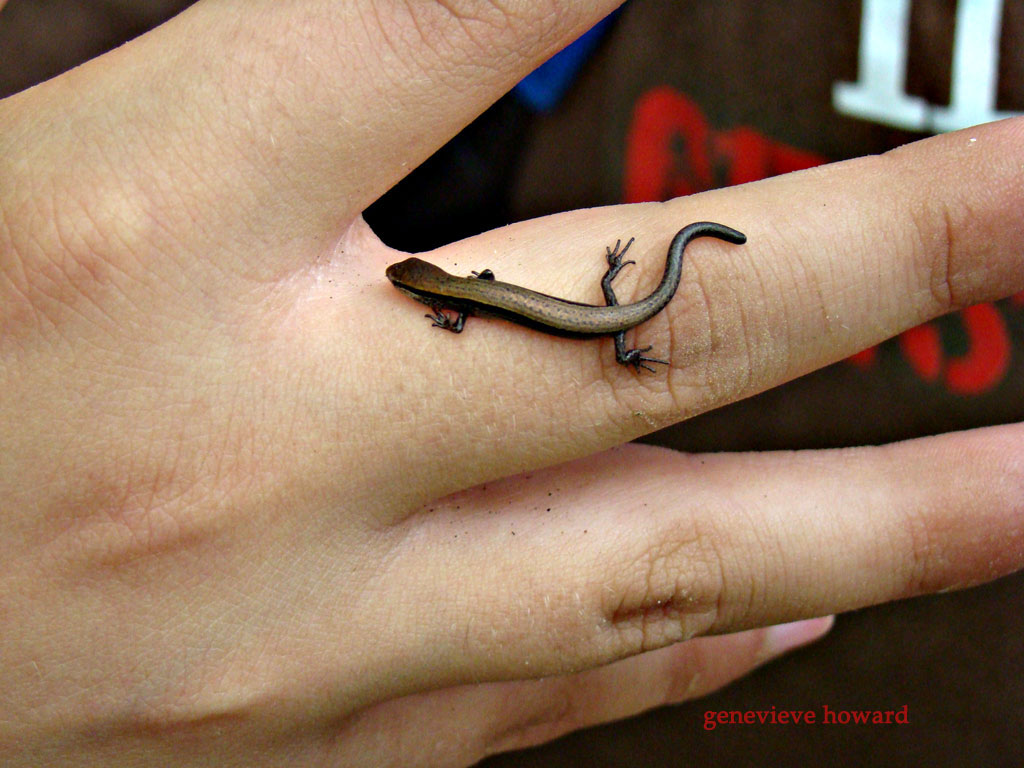
I’ll take my draft from November and fill in pieces of April’s draft and see what I end up with. For example, I really liked what I wrote about my childhood newt in November. (You had a childhood newt, too, right? Doesn’t everyone?)

Thank you, everyone, for the encouragement. Your belief in me and my story means more to me than you know.

I’ll keep writing and editing the memoir. I’ll let you know how it goes.

Next week we’ll return to regular blog posts!

Wishing

As we were wiping up at the end of our shift, Mike asked, “You need a ride, hon?”

I said that I did. We made plans and punched out with our time cards on the top of the time clock.

Out in the night air, we walked together to Mike’s red sedan. He opened the passenger door for me.

He drove me up to the 24-hour truck stop just on the edge of town.

We slid into one of the booths. We looked over the stained paper menu

“What looks good?” he said.

“It is after midnight, so I guess technically it’s morning. Maybe I’ll get some breakfast,” I said.

“Breakfast does sound good,” he agreed.

We ordered full breakfast platters and we weren’t disappointed. Our gum-chewing waitress served us long ovals plates of fried eggs, shredded hash browns, hardened bacon strips, shiny sausage links and toast cut into six triangles with a scoop of light margarine on top. Drops of grease dotted the plate edges.

At the counter, a truck driver leaned over his food while his cigarette sat in the ashtray. Outside his truck lights glowed in the mist coming off the St. Croix River next to the diner. He made small talk with the waitress and the cook behind the metal counters.

Mike and I ate our food and laughed. We pretended to fence with our bacon; it was as stiff as swords. He teased me for putting sugar and creamers in my coffee and I called him crazy for drinking it black.

We finished our meal and left the waitress a huge tips. People who have worked in service leave the biggest tips because they know how hard the work is. I can always tell when someone is stingy with the tip that they are spoiled and don’t know what it is to have aching feet.

He opened the car door for me. As we drove, I looked through the patches of cloud and saw a shooting star.

“Quick! Make a wish!”

We talked about shooting stars.

“You know they’re not real stars, sweetie.”

I didn’t. I was disappointed to learn I had been wishing on space debris all that time. But if there was anyone who was going to tell me the truth about shooting stars, I wanted it to be him with his soft eyes and gentle voice. He didn’t tease me for being stupid or not knowing much about how things worked in the world.

“Keep wishing, Gen. Keep wishing on them and hoping for things in your heart. That’s one of the things I love about you, how you get so excited and wish for things.”

* * *

I still wish on stars, 25 years later. Even if it is on space debris, I’m still making wishes. I still hope for things in my heart.

Broken hand to pray with (excerpt four)

The boogey man

“The boogey man’s gonna get you!” he said.

I was never exactly sure what the boogey man was. I imagined he was tall with long, strong fingers, quick to grab little girls’ legs.

Our house was two stories. Upstairs we had our kitchen, living room, the bathroom, my parents’ bedroom and my room.

Downstairs was the potting studio that opened out to the pool. My father had his own den with dark wood paneling. It smelled of pipe smoke and leather.

My sister’s bedroom was downstairs. It was a tie between her room, and my brother’s beneath the garage for most interesting place.

Her room had a jewelry collection hanging in front of her vanity mirror. The room always had a lingering scent of her spicy musk perfume. The perfume bottle top had a leopard fur button for spraying. She had a saffron yellow dress full of tiny round mirrors from India and a bright purple scarf draped around. She was 13 years older than me and without question, the most exotic person I knew. She seemed to always be leaving, leaving for a date with her boyfriend, then leaving for college when I was four.

My brother’s room smelled of aquarium and teenage boy sweat.

“Stop, you’re gonna overfeed them!” he said as I crumbled soft orange fish flakes over the tank top. I couldn’t help myself. I loved to watch their lips breaking the surface and pinching at the food that smelled like salty shrimp.

He had painted pterodactyls on his walls and they swooped down in a prehistoric sky. The aquarium bubbled. He usually had on the radio, the TV or both. He liked background noise to distract him from the constant whine in his ear, the tinnitus he developed after a bad dive.

I spent many times running up and down the stairs. I never knew when the boogey man would get me. I ran downstairs and GRAB! The boogey man got me! I shrieked! Then I heard my brother’s laugh and I ran down the rest of the stairs. He swept me up and spun me around.

“Better be careful!” he said.

*  *  *

Orange memories

orangeI sat at the table working on my penmanship and spelling. I had sheets of the thin lined paper with red lines for the top and bottom of the letters, and dashed blue lines for the middles.

I had an easy time with some words. Cat, house, man, mouse. But orange seemed like an impossible word. I couldn’t spell it out and I couldn’t make any sense of how to order the letters.

My brother sat down with me at the kitchen table.

“I’ll help you,” he said. “First, draw an orange. Make a circle.”

I made the o.

“Then, think about something you like to do, running. Oranges give you energy to run. What did you do after you ate an orange? You ran. Write ran.”

I added the ran. oran

“Now, you like oranges so much, they have the first two letters of your name. Write ge.”

I put them on. orange

From that day he taught me, I have always spelled it in three pieces. I draw the o, the ran and the first two letters of my name.

I never misspelled orange again.

I haven’t forgotten.

Broken hand to pray with (excerpt three)

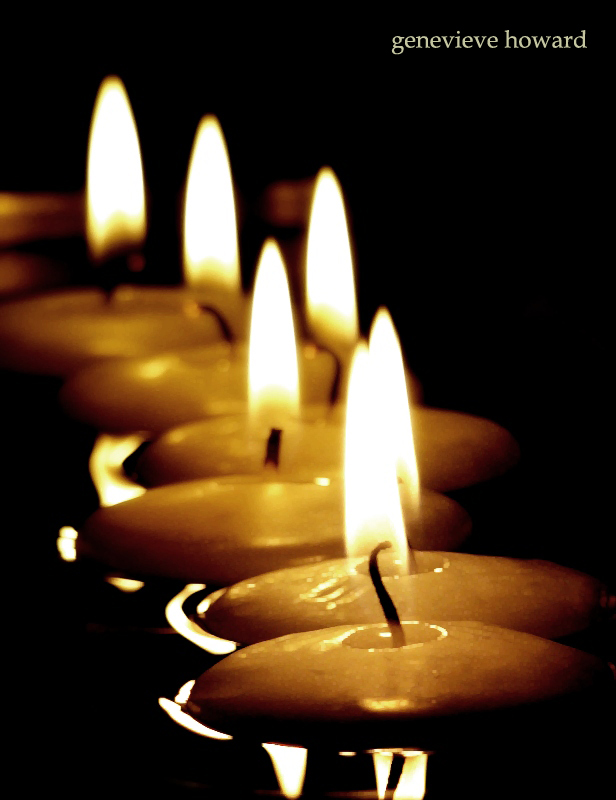
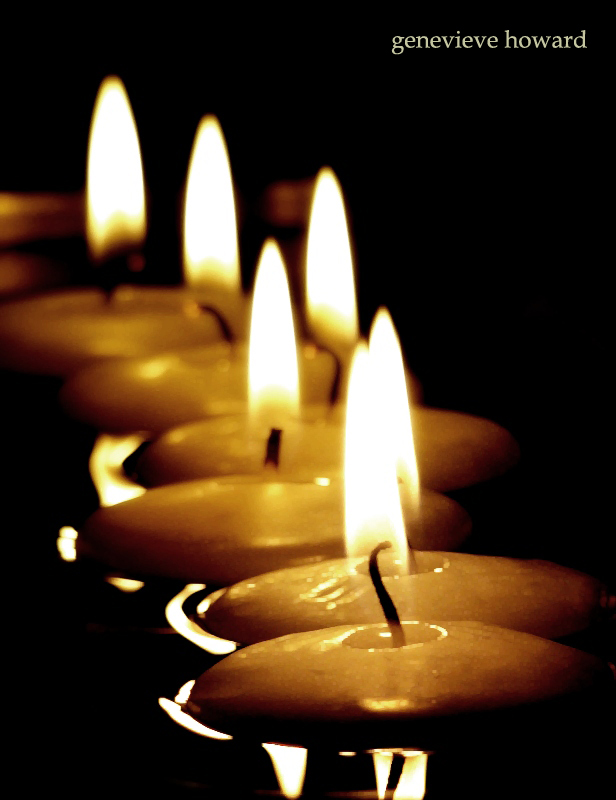
Candlelit prayers

candleAt St. Luke’s, I had a sense of belonging and a job. I was an acolyte. Before the service, I pulled on a white robe and got the brass candle holder that was almost as tall as I was. We made sure the wicks were trimmed.

The service started and it was a feast for the eyes and ears.

Father Jacobs wore floor-length robes, hand-stitched in gold thread in intricate patterns. We sang hymns from the hymn books in front of each pew.

Our noses took in the spicy incense wafting from the brass holder that Father Jacobs swung.

When it came time for Father Jacobs to read from the enormous bible in the aisle, the other candle acolyte and I stood on either side of him with our candles. Our official name was the Torchbearers.

The candle light wasn’t necessary. The bright walls and the stained glass windows kept the church bright. But holding the candle was an important duty.

We sat in a special pew next to the altar. As wiggly eight-year-olds, our attention drifted from the service. We couldn’t resist whispering and cracking ourselves up. The pressure of trying to be quiet made an ordinary comment funny.

Another priest might have fired us as acolytes. Too giggly! Too silly! We could be called. But Father Jacobs answered our giggles with a calm smile and patient look. We settled into the pew and watched the service again.

His kindness quieted us more than another’s anger could have.

I was an acolyte for less than a year but my time serving affects my life today. I still love candles. I carry his kindness like a torch. Not everyone needs it to live by but I offer it just the same.

*   *   *

My mother was a believer in candles. We could walk into any church or cathedral, and if there were candles to be lit, she would light one. St. Luke’s had a place to light them.

The candles were stair-step rows, some flickering from previous people lighting them, some fresh and unlit, some empty of wax with just the wick holder.

She dropped a coin in the box attached in the front and gave me one to put in. My coin clinked as it fell on top of other coins inside. A quarter was a whole week’s worth of allowance and seems like a lot to me for a little candle. A quarter was a significant amount in 1977, as gas was about 65 cents a gallon.

I don’t know what she prayed for. She never said.

She took the punk from the sand and found another candle to light it, then she lit her candle and passed the smoldering stick to me.

“Say a prayer when you light it.”

As a girl, I mixed prayers up with wishes. I imagined the candles at church were the same as candles on a birthday cake, except instead of blowing them out, you light them. I lit the candle and made a wish.

Then we stood. She watched the white candles burn and move. I stood next to her, waiting, not knowing her thoughts.

I was still at the age when I was willing to stand at her side even if I didn’t know what was going on, or how long it would take. I was willing to wait with her then.

Broken hand to pray with (excerpt two)

bruce

Riding Bruce’s motorcycle

bruce

(This excerpt is dedicated with love to the memory of my brother, Bruce 1957-2010)

I had my own motorcycle helmet as a child. It was blue with gold flecks.

I was as happy as a dolphin leaping when my brother Bruce told me to go get my helmet. It meant a motorcycle ride.

I put on the black strap under my chin and climbed on behind my brother.

He rode his motorcycle all through the hills and roads of Southern California. I held on for the ride.

He wore a button-down cotton shirt and I grabbed the fabric at his sides as if they were handles. My canvas tennis shoes barely rested on the back pedals.

The wind blew my hair back. I felt fast and strong.

The sound of his bike purred as he opened the throttle. It was a small bike as motorcycles go but I was five years old and the engine seemed more powerful than anything else I knew.

We wound around curving roads that climbed past gated houses. Evening fell. He took me to the top of a hill.

He stopped the bike and turned off ignition.

“Climb down, Genny,” he said. “Let’s take a break.”

With his motorcycle leaning on its kickstand, we stood and looked at the bright and glorious sight that was Los Angeles in 1974.

The city lights glimmered gold as far as I could see. Ocean air mixed with the eucalyptus trees.

For as much as my mother liked talking, my brother liked silence. I could sit for hours with him watching TV and we wouldn’t say a word. We stood in a comfortable quiet watching the lights of LA.

It was a clear night without smog covering the starry night sky.

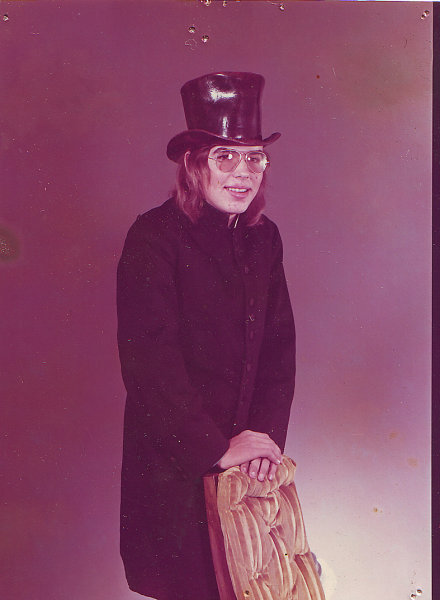
I don’t know what he thought about. He didn’t tell me. It was his senior year of high school. He was a nonconformist. He wore a leather top hat and drew cartoons. He had a few friends who could appreciate his trouble-making sense of humor but I imagine he felt the pain of not fitting in.

He would start college soon and never finish. He would start drugs soon and never stop.

But I didn’t know that then. I only thought about going places with my strong brother. I felt like we could go anywhere with the motorcycle as our steed to take us.

The gleaming valley under the stars beckoned us with its brightness.

My brother turned and smiled down at me.

He still had hope in his heart then.

Broken hand to pray with (working title, excerpt one)

angel

angelFriends, we’re doing something different here on Light to grow in during the month of April.

I’m participating in Camp NaNo, a spring version of NaNoWriMo, the annual novel writing event in November. Two important aspects of the NaNo movement are a clear due date and a vibrant community of support.

In November, I wrote my first book-length memoir. Almost 100 pages of people, memories and the foolishness of my youth. I felt blessed how the words poured out.

I let it sit for the proscribed six weeks as recommended by Stephen King in his brilliant book, On Writing.

Then I started to edit. Or sludge through unrelated scenes, summaries and free associations in valiant hope to find one strand of a narrative thread. Alas, not a strand! I spent more hours editing than I did writing. I started to wonder where I had gone wrong.

I talked to trusted friends and did some reading. I realized I had too many characters, too many messes and too many places for the story to be readable. Without a narrative thread, 100 pages were too long to follow.

Have you ever spent hours on something only to realize you need to go back and do it all from the beginning?

Do-over

In mid-March, I decided to start from scratch and rewrite the whole memoir. The day I made the decision, I felt a sureness I’d never felt during the weeks of editing.

I needed to write the first draft in November to get it all out. Now I’ll write the second one with the intention to make it readable.

A plan, a pair of friends, a purpose

With an outline prepared, I put strict limits on my characters, scenes and layers. My plan is to show fewer scenes in a slower pace.

I have the good luck to be writing this month with two talented friends who are working on their own books so we can encourage one another to keep slogging when the writing gets tough.

My purpose in writing my memoir is to show how grace and faith—even in amounts as small as a sliver—kept me going and they can get you through your dark times.

I’m putting my writing hours into the memoir so this month I’ll post raw excerpts from what I write. We’ll return to our regular blog posts in May. I hope you’ll enjoy the excerpts and I welcome your feedback!

Here we go!

Broken hand to pray with (working title, excerpt one)

Vacation Bible School

The summer I turned seven, I spent a week in vacation bible school. It must have been the church of someone my parents knew, some mother probably in fear for my soul in light of my non-believing parents. She offered to have me go with her daughter.

I didn’t know the girl, Kristie, well. Every morning, the mother picked me up in a wood-paneled station wagon and drove us to the church. It was a church combined with a school. We went to different classrooms depending on the activity.

The girl was quick to clump to her friends once we shut the heavy doors of her mother’s station wagon. I shuffled between activities as best I could, all the rooms and other kids unfamiliar to me.

On the last day, we learned we would have a contest. I walked into the classroom with excitement. I thought of myself as a lucky person. I won a goldfish at my brother’s high school carnival and often found pennies. I felt I had a good chance in whatever kind of contest this one would be.

“I haven’t seen you before,” said the man in a chipper tone with horn-rim glasses and a grey crew cut.

“I don’t go here,” I said. “We don’t go to church.”

He looked me over and focused his attention on the cleaner, smiling girl settling into the seat next to me. “Well hello there Kristie! How are you doing today?”

Once we sat down, he held up a plastic box molded in beige with brown spray painting on it to make it look aged. It was the size of my hand in length and width, standing about three inches high. It had a lid that came off.

From as long as I remember, I’ve appreciated a good container. Plastic, paper or wooden box, ceramic mug or china teacup, woven basket or stone bowl, I love them all.

Empty, they represent potential. Full, they make random items seem like treasure.

I wanted that box. Through my seven-year-old eyes, it looked wondrous.

The chipper man explained that whichever girl recited the most Bible verses would win the box.

“Study the Bible, girls!” He said as he handed out small Bibles for us to look over. “And you’ll use what you learn the rest of your life.”

We had an hour to look it over. The Bible was an edited children’s version. It included watercolor pictures every few pages. Noah on his ark. Moses parting the sea.

I skimmed the stories and tried to remember them.

The man announced it was time to recite our verses. Girl after girl went to the front and prattled off sayings. Then it was my turn.

I walked up. I could remember nothing. He hinted, “How about, ‘Do unto others…'”

I repeated, “Do unto others.”

“No, do unto others as…”

I stared at him, waiting for more of a hint.

“Do unto others as you would have done unto you.”

I gave him a blank look. It meant nothing to me. What was “do unto others”? What was “done unto you”?

He shook his head.

I walked back and sat down.

Kristie went to the front of the class and recited verses about lights and words, green pastures and sheep. The man gave her the box. We clapped.

As I sat behind Kristie on the ride home, I could see over the front bench seat. Her mom chirped happy words about how proud she was of having such a daughter. With narrow eyes, I watched Kristie take the lid off and fit it back on.

People knew her name. She belonged. She won boxes.

I rode in the back seat, driven by someone who felt sorry for me. I had no box of my own. The car creeped down my steep driveway to drop me off.

“Bye now!” waved her mother in her cheerful voice. Kristie said nothing. She held the box in both hands as she looked at me through the window of the station wagon pulling away.

I dropped the coloring pages in the trash as I walked in the house. Noah, Moses and Jesus rested on top of cantaloupe halves and coffee grounds.

That was my only–and last–experience with vacation bible school.

Three ways to make poetry a spiritual practice

lenten rose

lenten roseHow has your Lenten season been? As my spiritual practice for Lent this year, I’ve written a free verse poem every day. I approached this practice with a willingness to let it change me.

What have I learned so far? First, commitment counts! I can write when I don’t feel like it. Many evenings, I didn’t feel creative. I could still create because I made the commitment I would.

Second, when I focus on the process—doing and relating, it’s harder to worry about results and effects. These poems were meant to bring me closer to God. I didn’t need to worry about who would think what about them.

Third, a “we” voice lives within me. If you’re familiar with my poetry, you’ll know I’ve been an “I” person in my poems for the past 20+ years. Each time my hand wrote “we,” I wondered where it came from. It’s a nice surprise to write from “we” and not “I”. May it continue past Lent!

Would you like to try something enjoyable and thought-provoking? I invite you to try making poetry as a spiritual practice! You can take as little as five minutes. This is my process.

Read it

I begin with reading Scripture. Before I read, I settle myself and breathe. One of the great problems of our time is our pace of life. I have to slow myself down before I read sacred words. It’s no good skimming!

Use spiritual literature that you find meaningful. It might be your holy book, a poem or a devotion. Meditate and rest in the tiny garden made of wisdom and alphabet letters that seems larger once you are inside it.

Respond to it

After I take in a small amount, I let the words digest. I imagine the scene and inhabit the feelings.

Ready yourself to receive a new understanding.

Ask yourself, What is it like physically? How is the air, the light, the water? What am I experiencing inside the words?

Write it

Then I tip my pen over and let my words pour out.

You might have a critic in your mind who is quick to judge and say, “That’s stupid!” as you write. That’s OK. Say, “Oh well!” right back to the judge and let the words spill onto the page anyway. This is between you and the Holy Spirit. Your inner critic is not part of this particular conversation.

Examples

Here are a couple of examples from my Lenten journey this year. These are unedited, raw words as I wrote them.

February 26, 2013

He makes me lie down in green pastures;
he leads me beside still waters;
he restores my soul.
Psalm 23:2

It was a dusty, long walk. We had so much grit
in our throats, we felt like our throats had turned to
sandpaper and we sanded our own
surfaces when we swallowed.

Our feet had long since stopped hurting.
They’d gone past tired to become
wooden boats we drug over rough dirt,
the road a dry stream bed.

We smelled the heat as much as felt it.
It dried our noses and eyes.
Everything had that overbaked smell and
things fluttered in the hot wind.
When he led us to the green meadow,
we collapsed more than lay down.

We put our heads next to the sparkling stream
as if it were a long love song that
we couldn’t hear enough of.
We listened to it sparkle and flirt
with the shore, playful in its splashing.
It was not a stream in a hurry.
It meandered and strolled.
We drank and drank more.
We smiled again and talked.

March 19, 2013

I have so much to write to you but
I would rather not write with pen and ink; instead
I hope to see you soon and
we will talk together face to face.
Peace to you.
The friends send you their greetings.
Greet the friends there, each by name.
3rd Letter of John 13:15

We were full with words, like an Easter basket
so filled with eggs that
the slightest bump tumbles them out.
We couldn’t wait to be together and laugh in person,
about the misunderstandings,
the unneeded worries,
the overlooked grace.

Final thought

May the hope of Easter live in your heart this week and always!

I’m scared of you reading this blog

Pixie runs in the snowWhether it’s biting spiders or sinkholes, we all have things we fear.

A common emotion, fear helps us when we’re in real danger. If we’re driving in bad weather, concern makes us respect the poor road conditions. When we’re passing a group of shady people, suspicion keeps us alert and motivates us to move away from a bad situation.

The problem is when fear becomes a stop sign instead of a warning. Fear can stop us from leading active lives where we participate in fun events and new adventures. People might worry about airplane crashes or shipwrecks so much that they don’t travel.

Fear often involves death, loss or some kind of ending such as the maximum entropy of the universe. Who hasn’t worried when a loved one doesn’t arrive home at the expected time? Who hasn’t felt anxious when the elevator stutters and seems to stop working? These are natural fears. We care about who we have in our lives and we prefer to be in control of our experience.

What about how we want to protect our egos and our social standing? We have a real need for others to accept us. We’re afraid of losing face, looking stupid and being embarrassed. Sometimes we dread others’ anger, rejection or judgment so much that we don’t say what we think.

This is my fear.

For me, 2013 is the time to face my social timidity and make this the year of my voice. I’m not a natural speaker or writer. I’m more comfortable being quiet and keeping my thoughts to myself, the words deep in private journals far from eyeballs. But just because it’s comfortable, is it right?

Sometimes the right thing for your life is the terrifying thing. Be open to your purpose. Where do you feel guided?

For me, I felt a calling to write and speak this year, despite how these things unnerve me. This is why I started this blog. Sitting in silence on the couch is safe. This blog seems dangerous. Speaking my mind seems dangerous. What if I speak and people hate what I say? What if I write this blog and I waste people’s time? What if, after I speak and write, people stop loving me?

Are you comfortable with how you deal with fear in your life? If not, here are some ideas so you can change your relationship with this feeling.

Replace fear with faith in 4 steps

Say to yourself, “I’m feeling scared.”

Simple acknowledgement of the feeling breaks its lock on your mind. Saying these words shifts the control from fear back to you. You can start making decisions again. Gather your thoughts and get your mind back. You’ll start seeing fear for what it is—a feeling—despite how it wants to disguise itself as fact.

My friend Shoshannah told me about this quote from Frank Herbert that she uses before she starts a martial arts sparring match.

“I must not fear. Fear is the mind-killer. Fear is the little-death that brings total obliteration. I will face my fear. I will permit it to pass over me and through me. And when it has gone past I will turn the inner eye to see its path. Where the fear has gone there will be nothing. Only I will remain.” (from Dune, Good Reads)

Breathe

A deep breath brings calm back. Breathe in, hold for a moment, breathe out. More oxygen allows you to think. Fear can make our hearts race and our breathing fast and shallow. Slower breathing brings back an easy rhythm to follow. You’ll return to being centered in your body.

Pray

Ask for strength, help and guidance. God will bless you. You don’t need to say a perfect prayer to a concept of a higher power that you completely understand at this moment. It’s OK to be scared and unsure. Your prayer will still be heard.

Do it anyway!

People who accomplish things aren’t always fearless people. They feel fear too but they go forward anyway. We can be like them.

Eleanor Roosevelt said, “Do one thing every day that scares you.” (Good Reads)

Keep your goals in mind. Think of all you have already lived through. You can do it. Have faith and go for it!

What do you fear that you’re working to overcome? What gives you courage? Tell me about it in the comments!

Special thanks to Tim Carson for inspiring this blog post and to all my friends who confessed their fears during my research!