Romance of the hook

afghanHow easy it is to fall in love!

Beginnings carry their own rushing wind, as if we start every adventure at the top of a hill and coast down. Then the bike slows and we have to pedal. The thought comes, is it worth pedaling in the direction we’re going?

I started this afghan more than a month ago. Ah, the excitement of the start! I decided to do an afghan to honor my great-aunt. I gathered together my leftover yarn.

This was going to be an amazing afghan! I would use up my leftovers and have something happy.

I grouped the skeins together: purples, brown, sea foam, white, black and khaki.

Missing those bright 1960s colors, I stopped at the store. I got cherry red and orange.

What’s better than the first loop, and the chain to start the afghan? I could pick the size. Of course it should fit our queen size bed! I chained 140 loops.

Pretty Little Moss

This is going to be the greatest thing I’ve ever made! Better than the forest floor prayer shawl. With that project, I had it in mind that I wanted to look like I’d rolled on the forest floor and come up wearing the shawl. It did turn out that way. Unfortunately.

Have you ever seen a six-foot woman wearing a shawl modeled on a forest floor?

I imagined I would look earthy, warm and natural, something from picturesque glades in Northern Europe.

What I looked like in reality was more unkempt—possibly rabid—squirrel than stylish Scandinavian.

All I need is a few twigs in my hair when I wear that shawl and I could pass for a veritable wild woods woman.

Give me a black kettle and a falling down cottage and the look would be complete. So that’s how that project went. I still wear the forest floor prayer shawl. Almost as a dare to see how people respond to it.

I used green fun fur in the shawl, so it’s super soft for hugs. It even feels like a forest floor, mossy and inscrutable!

But this afghan, it’s going to be marvelous!

The need to pedal…and shop

As I started to work on it, I realized I needed more colors. I went to the store for bright yellow and a neon variegated yarn called Blacklight.

Because I’m impatient, I went with double crochet instead of single as my great-aunt did. I figured she was retired; she had the time to single crochet a bed-sized afghan. I have two jobs to work and high school football to watch so double crochet it is.

My ideal timeline for a project is two weeks. Then I’m ready to be at the top of the hill again. Even with the double crochet—and excessive tea drinking that keeps me up in the evening to work on it—this afghan is looking like it will demand three or four months. I’m in the pedaling phase.

I’m six weeks in with more than 9,000 stitches done. Only 18,000 more. But such a big number overwhelms me. Better to think of the fabulous finished project—so happy, so colorful!

This afghan, it’s going to be splendiferous!

I needed more colors for it to truly radiant the 1960s zeitgeist. I got some green and variegated blue.

My son said, “You bought six new skeins of yarn so you could make something that was going to use up your leftover yarn? Do you see a problem here?”

I don’t remember what I answered. I was too busy thinking…

This afghan, it’s going to be magnificent!

Crying at the water’s edge

baptism

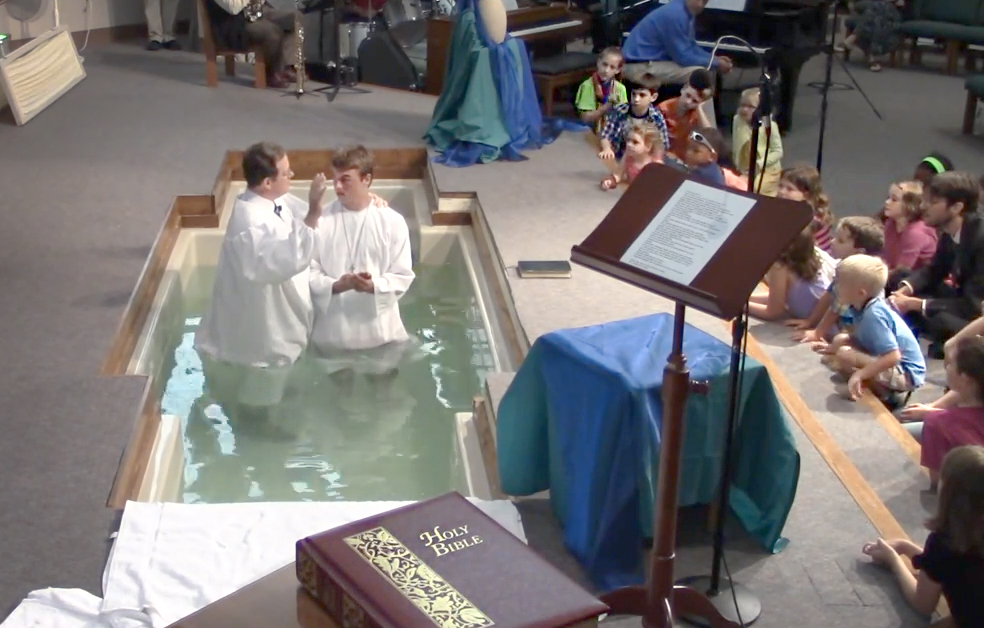
baptismThe baptism was over. The newly baptized teenager in a wet, white robe was welcomed with whoops, clapping and a big towel. The pastor stepped out and left to dry off. The little children who had gathered around the baptismal pool got up to return to their parents.

The worship service continued. My eyes stopped running and slowed to a trickle, just enough to wet my cheeks instead of my neck. My shakiness eased. I blinked a lot, still woozy from so much crying. My eyes felt replaced by sandpaper globes. The tip of my nose gleamed red like Rudolph, tender from tissue wiping.

I’d started crying an hour earlier, even before the service started. When I was out in the narthex—full of anticipation about the moment to come—my friend Carla approached me. We faced each other and she took my hands.

“How did your son come to this decision?” she asked, her eyes tearing up. “I didn’t think he was headed in this direction.”

“This summer, he had a revelation. He stayed up all night and wrestled with God,” I said. I could feel the pressure building behind my nose, my own eyes starting to pool.

“Like Jacob!”

“Yes, exactly! Wrestling with God like Jacob. He went through all his feelings and thoughts. For hours—all through the night—he struggled. He found answers for all the reasons he didn’t believe. As morning came, it hit him. He realized he did believe in God and he was a Christian. He even changed his status on Facebook.”

“So then it was really official!” she said and we both laughed. “How amazing that God worked in his life this way!”

“So amazing! It made me feel like God is working in everyone’s lives even when we can’t see it. We just don’t know,” I said. “I could have never guessed this.”

Grace and faith

After the baptism, as the service continued, I sat in happiness, knowing the pews around us were filled with friends who loved my son and took delight in seeing him get baptized.

Love flooded the sanctuary.

What is more precious than a child?

What is better than a child who dies to his old life and gives his new one to the service of the Lord?

He is a new creation.

As I sat, my son rushed up the aisle to me. I seized my still-damp son tight and wept fresh tears. We held each other and both shook from crying as the congregation sang.

Our pastor, Tim, explained at the end of the service that grace is God’s love given to all. Faith is our response to it. With faith, we start our relationship with God.

Ordinary moments and God moments

Most of my time is spent in ordinary moments. I copy and paste for hours at work. I disinfect the sink. I heat up chicken strips. I ride in an old car on a long commute. I crochet stitch by stitch on an afghan that seems like it won’t ever get finished. I let out the dog—again—even though she just went out!

But a few of my moments are God moments, when the holy light of God shines warm and clear. I can see and feel God with a palpable sureness, like my bare arm feels sunlight on a cool day.

I want for nothing. I feel complete, content and timeless. All is perfect. All is well. The tent door between our world and heaven is slid open so a sliver of light comes through. I look out. I get a glimpse of glory.

This moment—this hug from my son newly born in the life of Christ—was a God moment.

The last time I cried so much was from sadness: years ago when my brother died of suicide, a culmination of loneliness, desperation, mental confusion and drug addiction.

It was his death that made me want to go public with my faith as a Christian. It was his death that drove me to seek a church. Resa, the friend who sat at my side during my first visit to church, was again at my side, holding my hand while my son was baptized.

This time I cried so much from joy.

We can’t know what will happen. My son will take his own way with unseen hills to climb and curves to follow. I can’t make it smooth. But now he’ll travel with faith as a source of strength in a community of Christians all working our way toward God.

Our lives will end. But the love of Christ goes on forever.

And when Jesus had been baptized, just as he came up from the water,
suddenly the heavens were opened to him and he saw the Spirit of God
descending like a dove and alighting on him. And a voice from heaven said,
“This is my Son, the Beloved, with whom I am well pleased.”

Matthew 3:16-17 (NRSV)

Sandwiches are so hard

thanksI recently had an afternoon to spend at the local hospital. I needed some tests and then had an appointment a few hours later. It didn’t make sense to leave so I decided to wait it out.

Time is malleable. When I’m doing something I love, hours slip by as fast as a fox across a field. When I’m waiting to see an oncologist, minutes limp along, an arthritic dog laboring his way to the door.

I noticed that making decisions doesn’t come easily during the waiting time.

On a good day, I take my time to decide anything. I like to research and study before making a choice. If you’ve eaten with me in a restaurant, you know I can go two ways: always ordering the same thing or taking a long time to inspect the menu before asking the  server for his suggestion.

During a time of unknowing, my hesitant decision making skills peter out. I stood at the cooler looking at cold sandwiches for ten minutes. Roast beef? Cheese and tomato? Baguette? Italian? I was both thankful and envious when someone came up and took the last turkey and cheese.

Thankful because it was one less choice, envious because she had made her decision so quickly and maybe that  was the best sandwich!

Less emotional energy

When facing a big change or big news, I have less emotional energy. A sandwich choice is going to seem much more imposing than usual.

I went with the roast beef.

If you know someone has a lot going on, try making a decision for them.

During a crisis, the natural offer is to say “Let me know if you need anything.” Of course it’s an offer made from generosity but the person doesn’t have the emotional energy to let anyone know. She probably is struggling to even tell what she needs, let alone communicate it.

A concrete offer can be more helpful. “I will call you on Wednesday just to say hello.” “I will bring you tea at 3:15.”

You might get refused but that’s OK.

Sometimes the effort to not think about something makes it impossible to think at all. I didn’t want to think about cancer so I couldn’t think about which sandwich would taste good. It was as if my brain went onto energy-saver mode.

Facing something tough? Save your hard choices for the times when you’re clear-headed.

It’s OK to say, “I’m having an off day and I can’t make this decision right now.”


PS—I got to my appointment with the oncologist. She looked over the test results and said, “Not malignant. So that’s good news.”

I left the office and crossed the skywalk. I passed the prayer room and decided to go in. I fell to my knees, thinking, “Thank you God for the gift of my life. I know someone right now in this hospital is hearing the word, malignant. Comfort them and give them the strength they need.”

Giving thanks is one decision I know is always right, even in times I can’t pick a sandwich.

Why I decided to “look less tall”

new hair

new hairHave you had a day where you have no idea what you will look like at the end of it? I have. I call it, this past Labor Day.

I woke up on Labor Day morning, happy for the day off. My husband and I had worked on Saturday so it was great getting an extra chance to sleep in and not worry about being late for anything. Like work. Or church. Or 6:30 a.m. drop-offs at school for my son.

I luxuriated over a cup of Ceylon Orange Pekoe tea (thank you, Laura and Justin!) and made slow movements toward getting ready.

I picked up the cinnamon pecan muffins that I had made the night before and went to my friend’s house up the road for breakfast. She made a fresh pot of coffee and we sat on her back deck.

Ferns under the pine trees gleamed green while a hummingbird zipped by. It was just my kind of morning: friendship, caffeine and eating outdoors with a breeze and sunshine.

We talked about a little of everything, such as the dysfunctional relationships our pets can have. Her kitty jumps at the pet snake in its enclosure then the dog barks at the kitty. They seem to be driving one another a little crazy. The kitty could ignore the snake and break the cycle. But where is the fun in that? Don’t we all have something we could ignore, but we choose to get involved with instead?

What stood out to me was her haircut. She’d cut her hair short. “It’s so great! I just wash it and it dries in two seconds.” It looked cute but also daring. It was hair that was ready for anything.

As I drove home after a morning of ponies and laughter at my friend’s place, I thought, “Why do I have long hair? I don’t do anything with it. I always want the focus on my face so I keep it pulled back.”

“For more than a decade, I’ve thought of myself as a person with long hair. But what if I’m not?”

“Why do I need this hair?”

I realized I didn’t need long hair anymore. The afternoon of Labor Day, I had it cut off. (The last time I cut my hair short was 2000, in sympathy to my sister when she was losing her hair because of chemo. She’s been cancer-free since, hallelujah!)

Most interesting comment about my new hair so far? I look “less tall.”

What should we hold on to? Only the most valuable things. What will still mean something to you ten, twenty years from now? At the end of your life?

In my life, I’m an expert at holding on but a reluctant amateur at letting go. I have come from a proud line of keepers. Art, broken electronics, books, stuffed animals, cheap cubic zirconia jewelry, china, photos, assorted “things that might be useful/worth a lot of money someday”. Each of us cared about different things and kept what we found valuable whether anyone agreed with its value or not.

In the end, it’s all stuff. Stuff that has to be dealt with after the person collecting it is gone. The remaining family members try to sort through it. Is this piece of paper valuable? A decision is made. Good. Only one thousand more to go.

What should we do with this furniture, this painting? It exhausts people to have to organize a deceased loved one’s belongings during the midst of grief.

To have and to hold, to let go and be bold

As I learn to release, I’m working to be someone with an open hand who can let go with joy. Life  and death, gain and loss, health and illness will happen, no matter how much I own and how many things I have surrounding me.

I want my clothes, my belongings and even my hair to reflect that I trust in God’s goodness.

Even if I’ve held on to it (grown it out!) for years, I’ll practice letting go of what I don’t need.

Long hair, old identities, habits no longer needed, unhelpful relationships, things that don’t matter (be they resentments or excessive material goods), all that can go!

From now on, I’ll just be a person, instead of “a person with long hair”.

I’ll ready myself—empty myself—so I have space to receive the good things to come.

I’ll travel light. Do you want to join me?

What will we keep? Visits with friends.

The next blessings coming our way.

We can collect moments of kindness. Let’s hold on to hope and faith! We’ll see what that brings us.

I suspect it might bring peace.

Laugh a little more

friends laughing

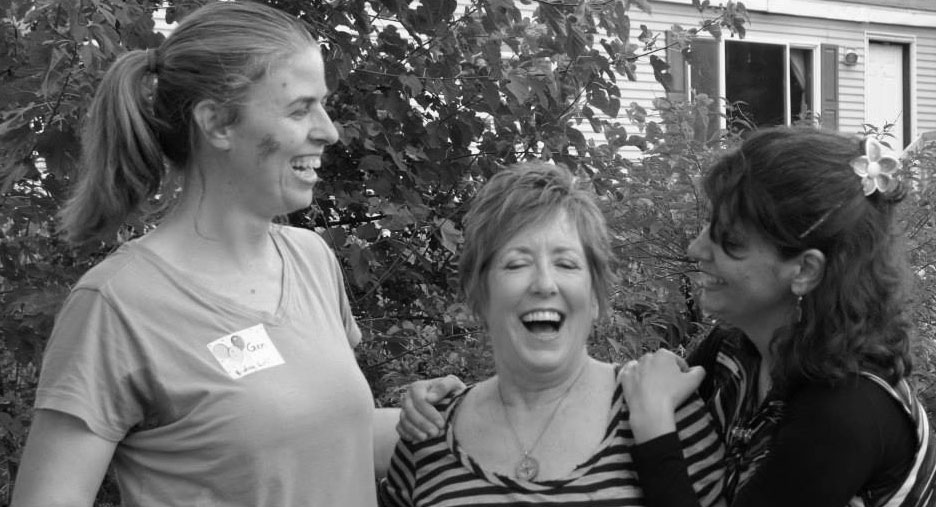
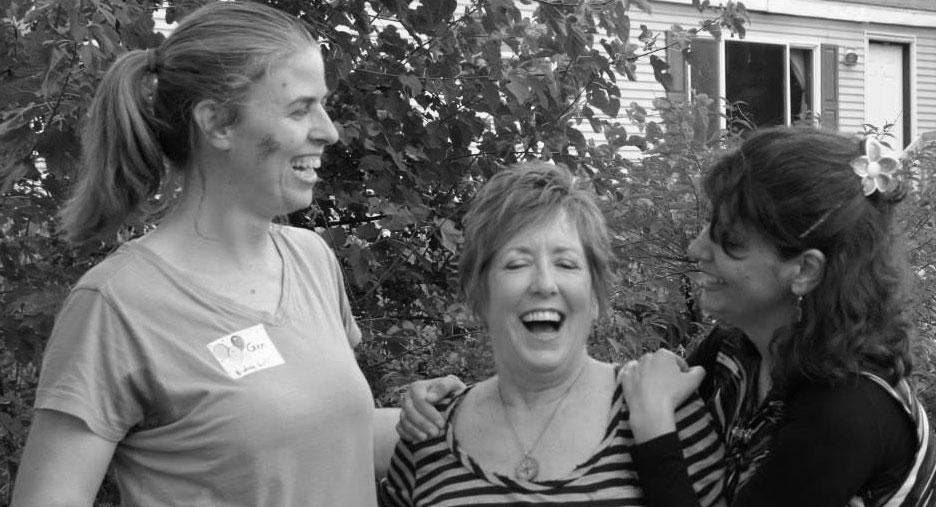
laughingIt will get you through hours at the hospital, days of hospice and months of hard times. It can diffuse fights and lighten your mood.

It can even help you deal with cranky people. What is it?

A sense of humor!

The $100 Band-Aid

In my family, we have jokes that have been distilled into one phrase. With an injury, we can look at the hurt person and say, “Do we need to take you to the ER for a Band-Aid?”

This refers to the time my son cut his hand on a painting canvas. He was about nine years old. He showed me the wound. By wound, I mean geyser of gushing blood. I couldn’t tell how bad the cut was but based on quantity of blood, I thought it needed stitches. It was Sunday evening and the walk-in clinics were closed. The hospital was our only choice.

We prepared to go to the hospital. We let the dogs out, put on our shoes and got in the car.

We live in the country. A trip to the closest gas station is 15 minutes. The hospital is 40 minutes away with no traffic. By the time we got to the ER to check in, it had been more than an hour since the cut.

We waited 45 minutes for our turn. The nurse led us back to a bed. He asked to see my son’s hand. It had been about two hours since the injury. The nurse peeled back the bloodied bandages. He wiped it and peered at my son’s palm. Our heads formed a circle as we all leaned in to look.

There, near the pad of his thumb, was a cut the same length as a grain of rice.

“Looks OK now,” he said.

“It seemed worse when it happened,” I said. “It was bleeding a lot. I thought he would need stitches.”

“I don’t think there’s enough of a cut to fit a stitch. I can put on a Band-Aid.”

He unwrapped the package and stuck it on.

We walked out, $100 poorer, brand new bandage attached, laughing. Who brings their kid to the ER for a Band-Aid? Us, apparently!

You’ll have times where you make mistakes. It’s clear I lack the ability to diagnose wound severity. But a sense of humor will let you off the hook of dwelling and self-judgment.

Humor for hard times

We need humor more than ever when we have to go through something hard.

You’ll have situations that you don’t know how to deal with. Things like a friend fighting with her ex-husband, a parent dying, a coworker losing a job, a child in intensive care.

Laughter can be a moment of relief, a way to lighten the situation. A joke about the hospital’s terrible pudding or the ridiculous way the ex-husband writes emails can ease the tension.

Our family’s sense of humor gave us the ability to survive hundreds of hours in hospitals (for things more serious than microscopic cuts) with our sanity intact. Laughter warms up the most sterile of rooms and fills up a heart.

Having a hard moment, hard day, seemingly hard life? Look for the ironic, the nonsensical, the cheesiest thing around. Rejoice in the life you have—imperfect, difficult and confusing.

Find a way to laugh more and get through it!

What tough things has humor helped you through? Tell me about it in the comments!

The Luckiest Paper Clip Finder You Know

sixteen paper clips

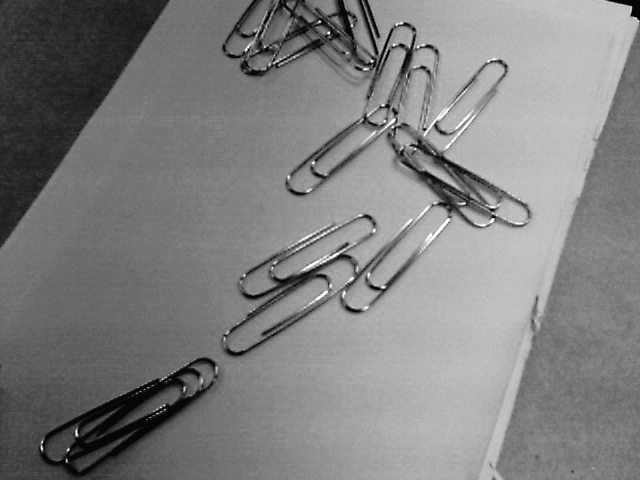
paper-clipsIf you’ve walked with me, you know I often find paper clips. I’m probably the luckiest paper clip finder you know.

When I catch sight of the silver glint, I stop. It’s a moment of discovery and remembrance.

The way people respond when I find one tells me more about them than they know. There are those who dismiss me as quirky, or crazy. There are those who take part in my delight. These are my friends.

They look for them with me. They look for them on their own and when they find one, send it to me taped on greeting cards with a kind word, “Found this today and thought of you!”

They scatter paper clips for me in secret so I can find them on my way. Such love blesses me. Their desire to make me happy makes me happy.

It started on Sept. 20, 2011. After lunch with a friend, I found a wealth of paper clips outside the door of my building, Gentry Hall. I wrote this poem.

what it is to love you

walking back from lunch
i noticed silver glinting
in afternoon light–
nineteen large paperclips scattered
for the taking.

i picked up sixteen–
their metal warm from the sun
and i left three
in case someone else wants
to discover treasure
and feel rich

so many paperclips
in my hand

now i can attach papers together
without puncturing them as staples do
without making them stick forever with glue
and take the risk of being torn apart in separation.

paperclips bring them close
enough to touch
but keep them easily freed
at any moment

Finding spirit

Some people understand me without explanation. I was walking with a colleague on campus to a meeting. At sight of a paper clip, I remarked on it and stopped to pick it up. “It’s good luck to me,” I told her.

“Oh, your thing is paper clips? Mine is pens,” she said.

It can be difficult to see God’s work in our world. Even if you’re in a moment of health and power, strength and youth, beauty and popularity, you know the moment will pass. We all have lived through—or will live though—brutal experiences. Terror, violence, isolation, suffering, irrelevance, bitterness. Sometimes we carry our losses so long that the weight of them bends over our spirits. We can live in a schism, disconnected from our deepest needs of joy, peace, hope and love.

When I find a paper clip, it reminds me of God’s abundance. I can trust that good surprises still await me. New friendships, new journeys and new ways of seeing.

We are free to choose what we see and what we look for. We decide what we value. We can take the lost and give them a home, as I have with my cats, dogs, pony and paper clips. We can help a friend find the thing she thinks is lucky.

I’m a searcher. I search for grace, a kind of paper clip that fastens my life to God.

I often find it. More often than I find paper clips and I’m quite the lucky paper clip finder.

Is it from luck? Or is it from looking?

Easy organizing tips from a basket case

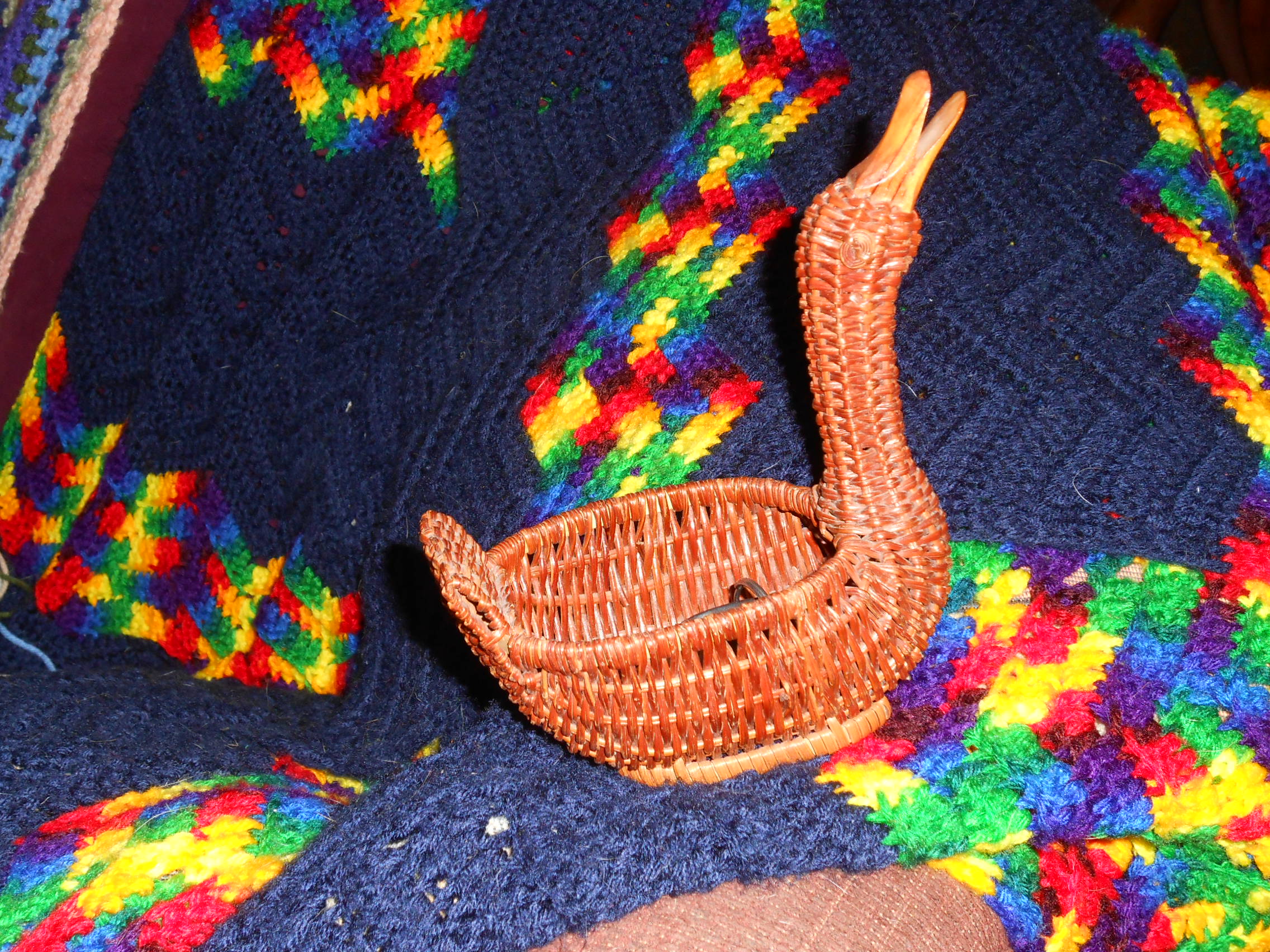
tiny duck basketI’ve never been known for my homemaking skills. We are not what you would call disciplined people. But we have made a positive change in what our house looks like this summer. You’ll hear our story and find out how we made it happen using a party, a plan and prizes.

I don’t possess natural or learned talent at running a household. After you read my upcoming memoir, you’ll understand why I never got basic household skills. To make a long story short, I’m someone who prefers poetry to picking up. The result? People have described my home through the years as “lived in” or “cozy.”

My husband worked in a bookstore for years and he told me that the people who buy yachting magazines are not yacht owners. They’re the people who dream about owning a yacht.

Who do you think are the people who buy organization books? I have so many books on getting organized that they clutter up my bookshelf. Some take a feng shui approach (“chi needs to flow”), others a hard line (“don’t be lazy—scrub that toilet with a toothbrush!”). Some suggested “easy tips” that I failed at following, either proving that they weren’t as easy as promised or that I am incapable of doing easy things. “I’ll take the hard way, please, full chaos.”

A case for baskets

We live in a singlewide trailer that is 16 feet across by 66 feet long: 1,056 square feet for three people (who have clothing, shoes and toiletries) plus two dogs (who need toys, blankets, beds, food and treats) and two cats (with their six-foot-tall cat tree, toys, food and catnip. Need cat organizing tips?).

Just all this everyday stuff might give our house a “pleasantly plump” feeling but on top of that, we’re collectors. We collect comics, books, board games, plastic horses, magazines, electronic devices, Playstation games, craft items, mismatched tea cups and plastic Shakespeare’s/Heidelberg cups. (I reached my goal of 100 plastic cups a while ago but just added one more today. Why do we do it??)

I also collect baskets. At last count, 48. Because, as you can tell, I need someplace to put things.

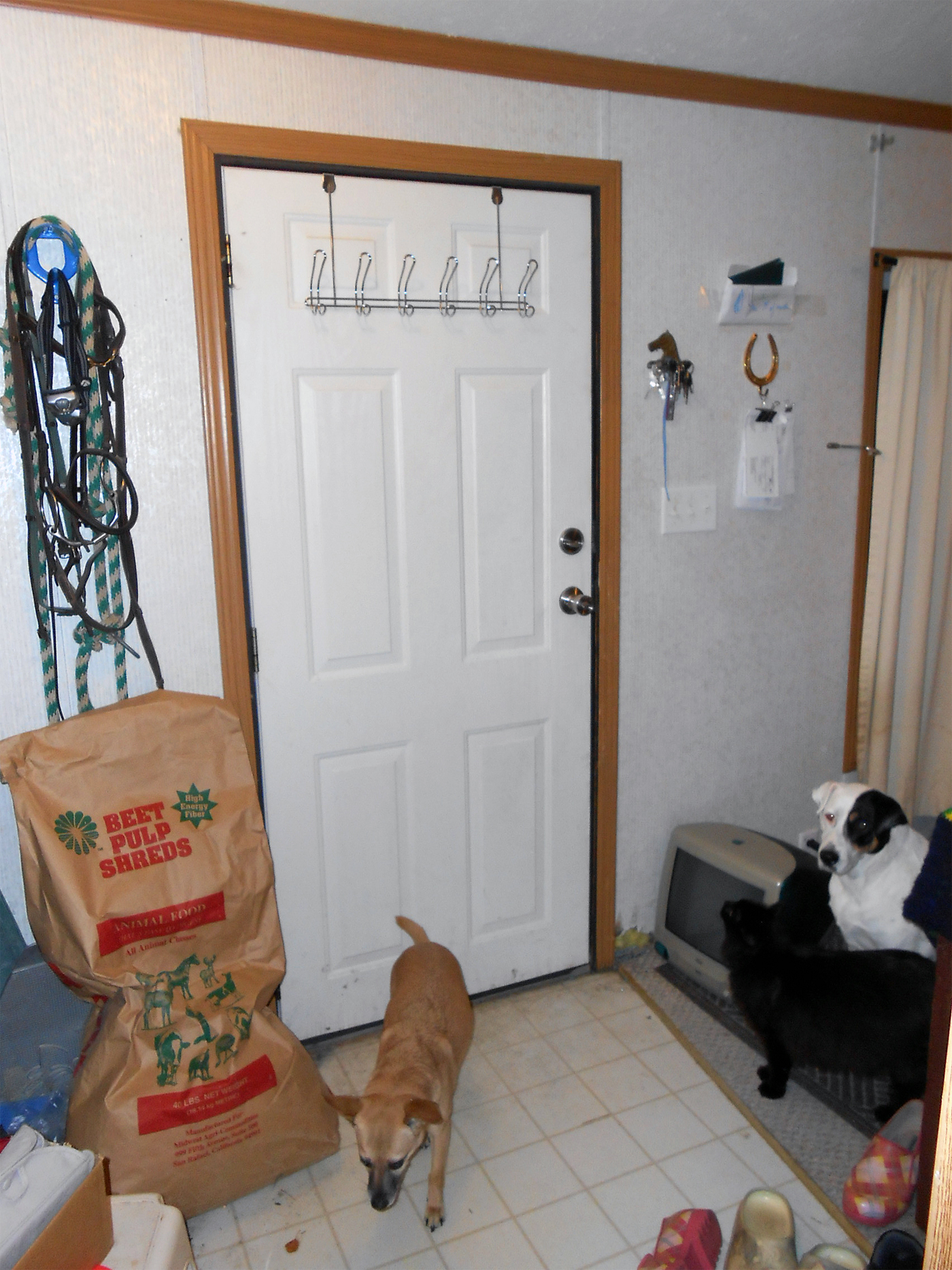
beet pulpAlthough most of the stuff for the horse and pony is in the barn, we keep the saddle, bridle and beet pulp in the house. Don’t you have a bag of beet pulp by your front door?

Holding onto so much stuff means that we’re living in the future or the past. Part of our stuff is memorabilia. This was a gift from so-and-so. I went on a trip and brought back this mug. My iMac G3 was the coolest computer ever (also by our front door).

Then we hold onto things we might need for the future. I have 190 skeins of yarn because all the yarn stores in the world might DISAPPEAR WITHOUT WARNING. I need to be ready for the yarn apocalypse.

In the middle of all this stuff, I know I’m not living according to my beliefs. So much clutter shows that I’m putting fear before faith, materialism before transcendence.

I believe God works in the present. If I am aware and my space is open, God has room to move in my life. I can let go and trust that God will provide my daily bread. And yarn. And baskets for me to put my bread and yarn in.

A party, a plan and prizes

How did we turn it around this summer?

First, a party. A party motivated us to move the dozens of shoes out of the foyer so we could open the front door for guests.

Second, a plan. We found a book with a weekly checklist of household chores divided up throughout the year. Who knew we were supposed to vacuum under the couch cushions? I love a good checklist almost as much as a nice basket.

Third, prizes. Using the checklist in Stephanie O’Dea’s Totally Together, we give ourselves a prize for making our cleaning goal five out of seven days. We decide each week at our family meeting what our upcoming prize will be. It might be a visit to a store we like to (window) shop (like Itchy’s Stop and Scratch) or to a café for a boba drink.

How has our new way of neatness affected our lives? We come home and it feels like a sanctuary, not a storage shed.

I used to think cleaning was a burden. Now I see keeping the house clean is a kindness to us. We wake up to open space. We find things when we need them. We have room to move. At night, we climb into a made bed and the covers welcome us.

If you would like more order in your life, whether in your home, your office, your shop or your barn, try the party, plan and prize method. The party can just be one friend stopping by. The plan can be as simple as 10 minutes a day picking up. The prize might be a pack of gum.

We have a long way to go. But if we can make a good start, then I know you can too. Leave your tips and troubles in the comments. Let’s get organized and get energized together!

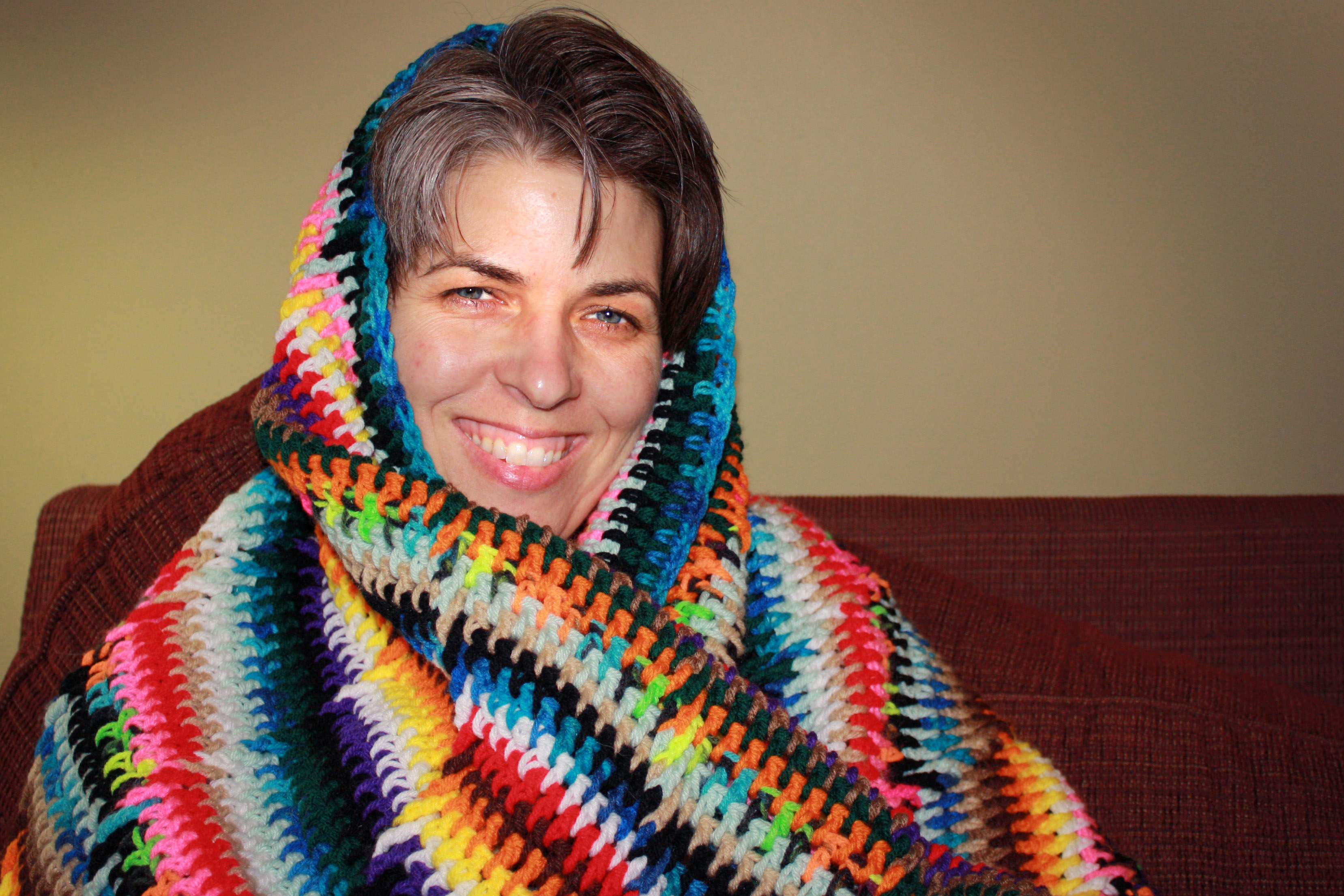
Was it grace that made this afghan?

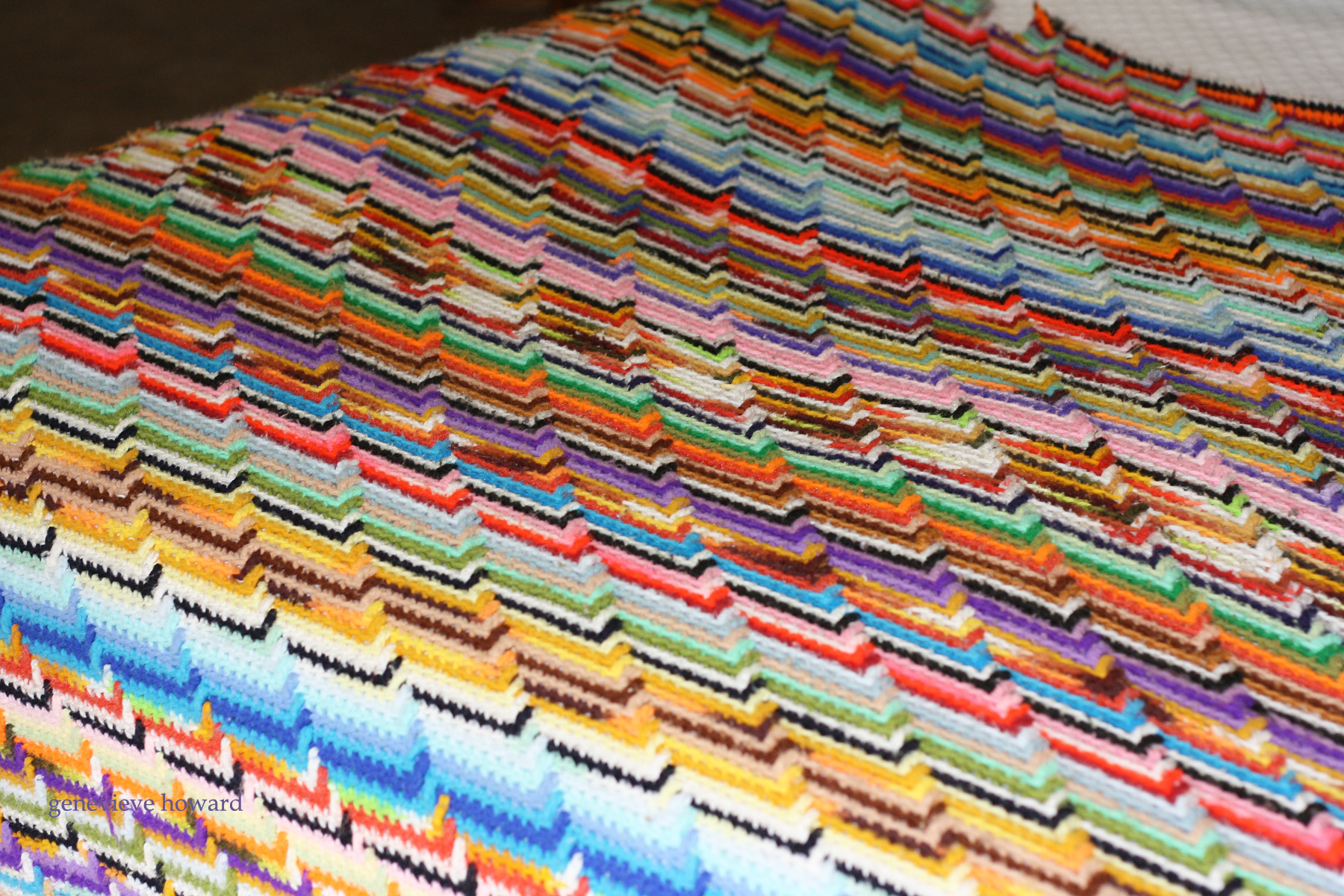
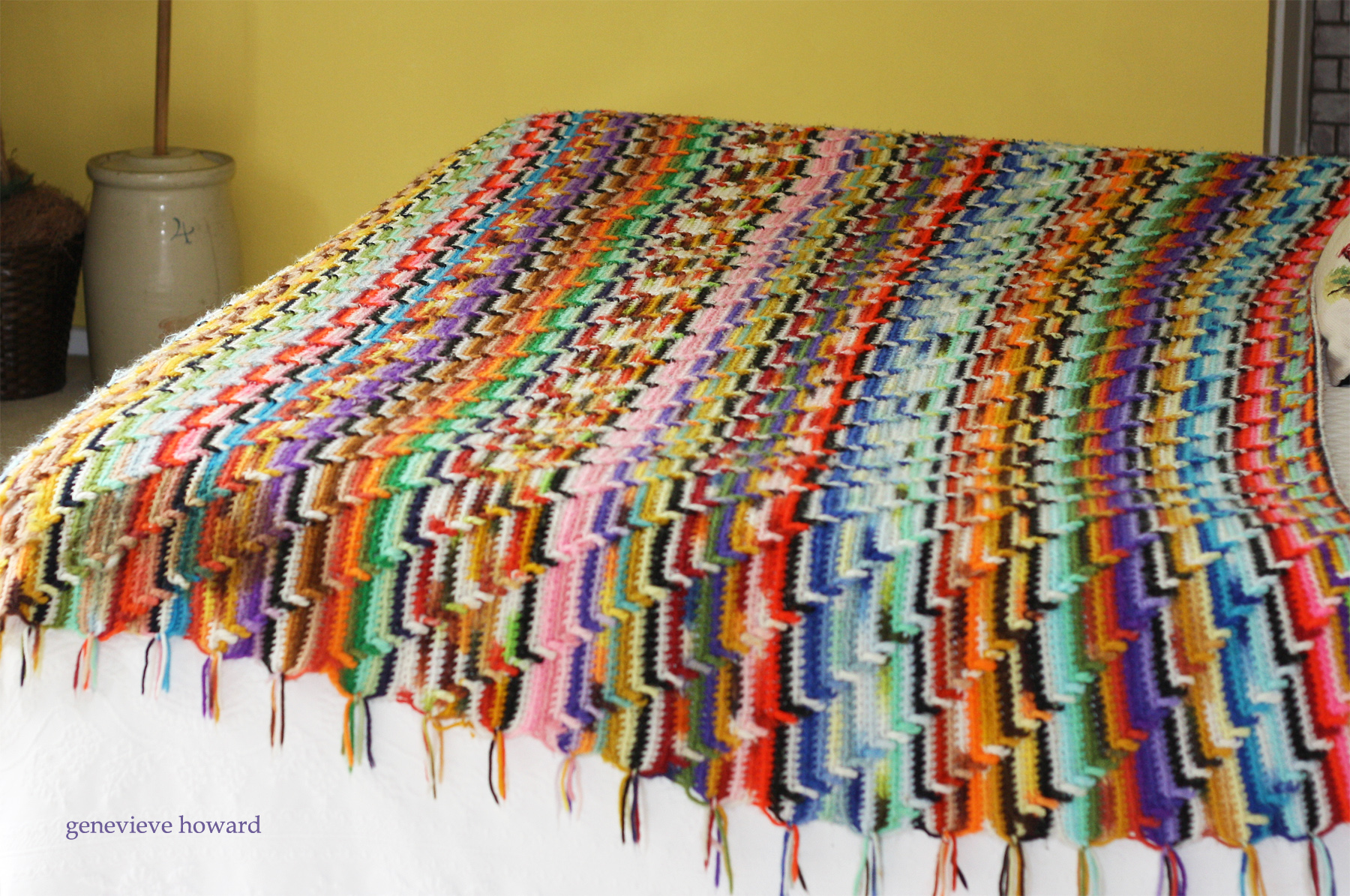
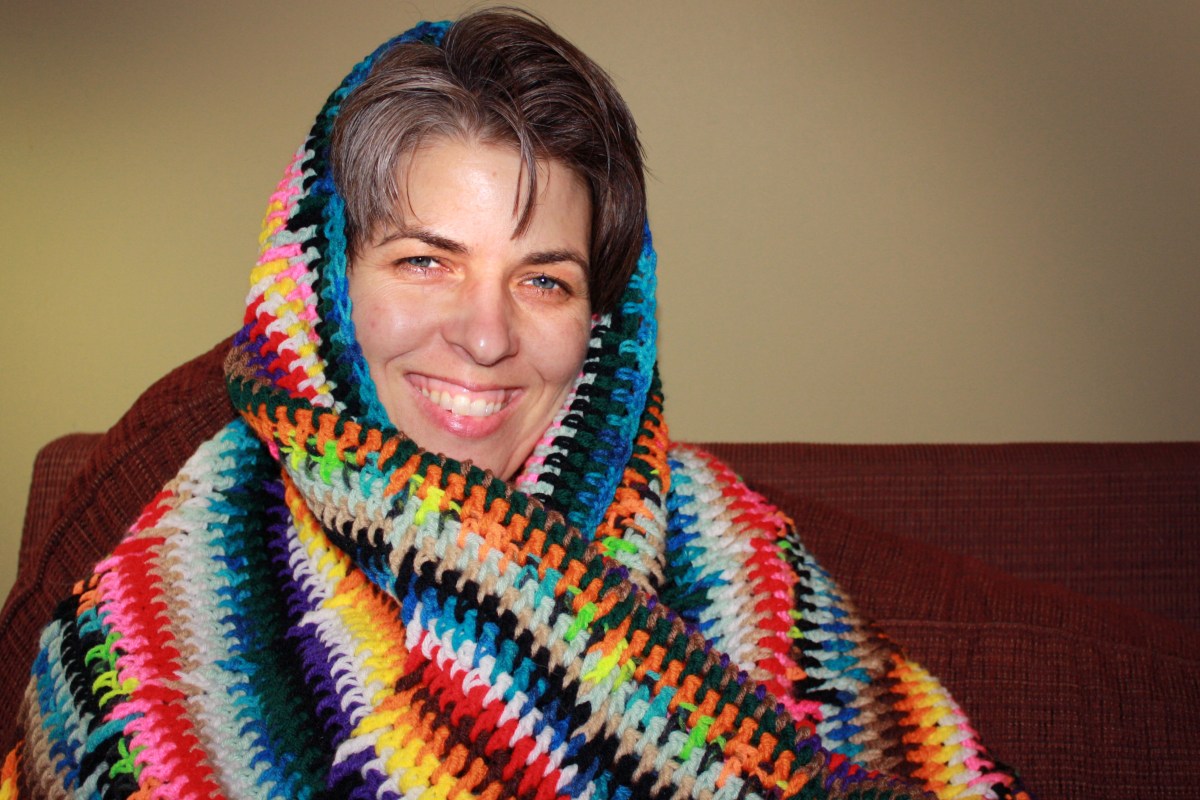
afghanI saw this afghan while visiting my dad. It was the afghan of my childhood, thrown over the back of the couch or folded in the corner, biding its time for winter when it would be used again.

The colors jump out in vibrant combinations. A saturated holiday red with neon orange, mustard yellow and purple, tawny brown, baby pink, true black and icy white, snuggling together for a fantastic effect. The acrylic yarn—showing its origin of the 1960s—reflects a sensibility that cannot be found now.

I didn’t think anything of the afghan growing up. It had use but no particular value. It was one of thousands of items that filled our house, just one more thing in the living room, like my Atari. I didn’t question why the afghan was there or who had made it.

Then almost 30 years later, I saw it again on the back of my dad’s couch. Its outrageous colors caught my attention.

“The afghan!” I exclaimed as if running into an old friend. The 1960s cheap acrylic was tough enough to survive the decades.

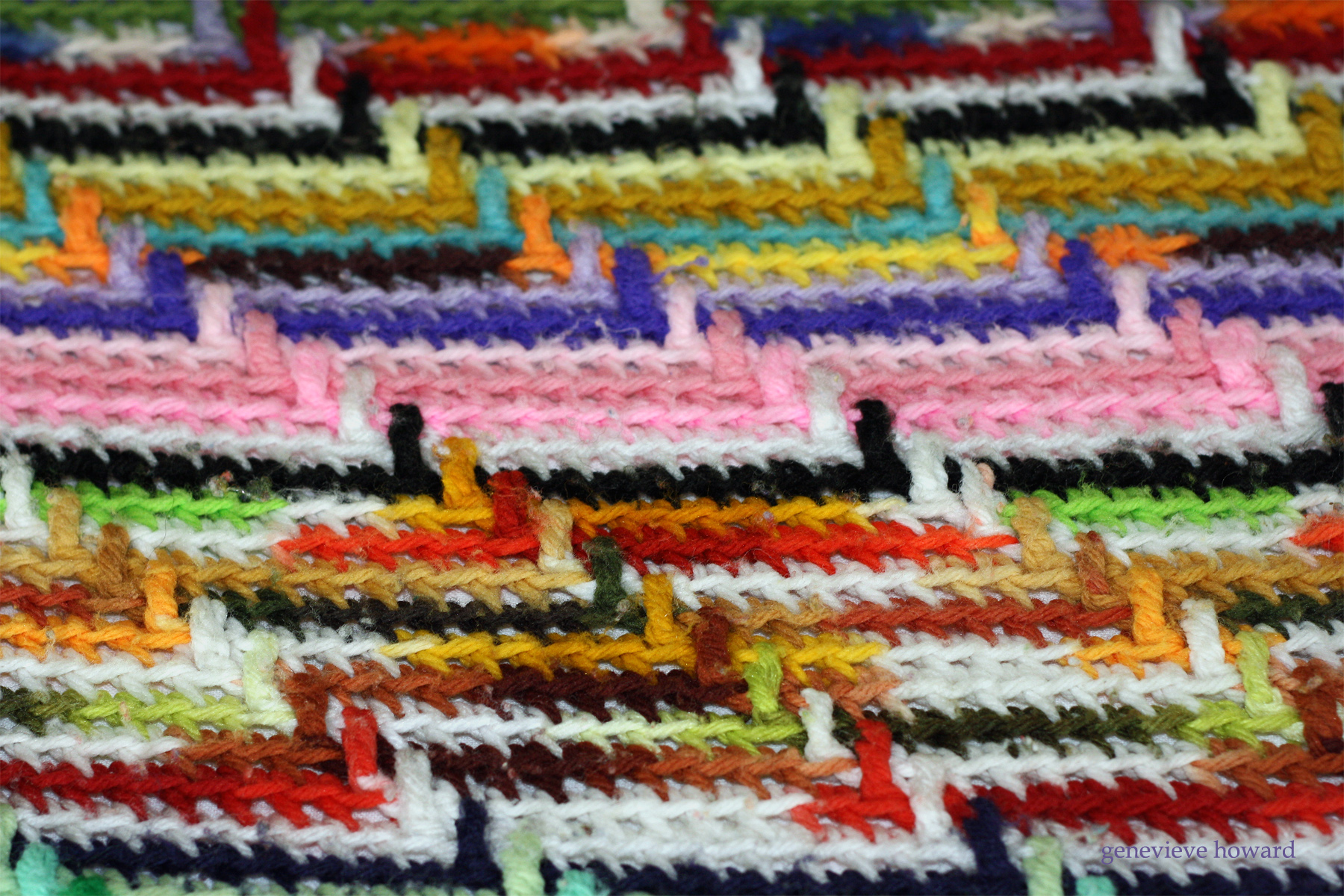
long-afghanI stretched it out to look at the stitches. Now that I crochet, I know more. I interpret the language of loops and understand hours of handwork. At first glance, I thought she had made spike stitches. When I looked at the back, I saw it was smooth. I realized she had done front post stitches, raised only on the front.

I counted and made note: 10 sc, 1 FP sc, staggering the raised front post stitch by one with each row. I saw the afghan with new respect.

Large enough to drape over a queen-size bed, I wondered about its maker. I asked my dad and he thought it had been one of his aunts, maybe his Aunt Cena.

Was she at peace when she made it? Was she content to crochet along, making thousands of stitches?

Later I talked to my sister who also had a family afghan of the same vintage. She told me the yarn wasn’t from many scraps, using up leftover skeins as I had imagined but instead from fanciful skeins sold in the 60s, the variegated colors ready-made.  She named off my grandmother’s siblings. She believed our Great-Aunt Grace—a sister by marriage—made the afghans.

close-afghanI know little of my family history. I have no family afghan. But I’m bound to all those who care and have cared enough to create. Items carry our spirit if not our name.

Grace—shown through generosity—makes each afghan. Even the strongest acrylic yarn will fade and disintegrate but grace goes on forever.

Grace is always around, like a family afghan. Not always noticed or appreciated but waiting for you. Find it. Wrap it around yourself. It will warm you, shape you and bless you, if you let it.

A prayer for my father who has never been taller

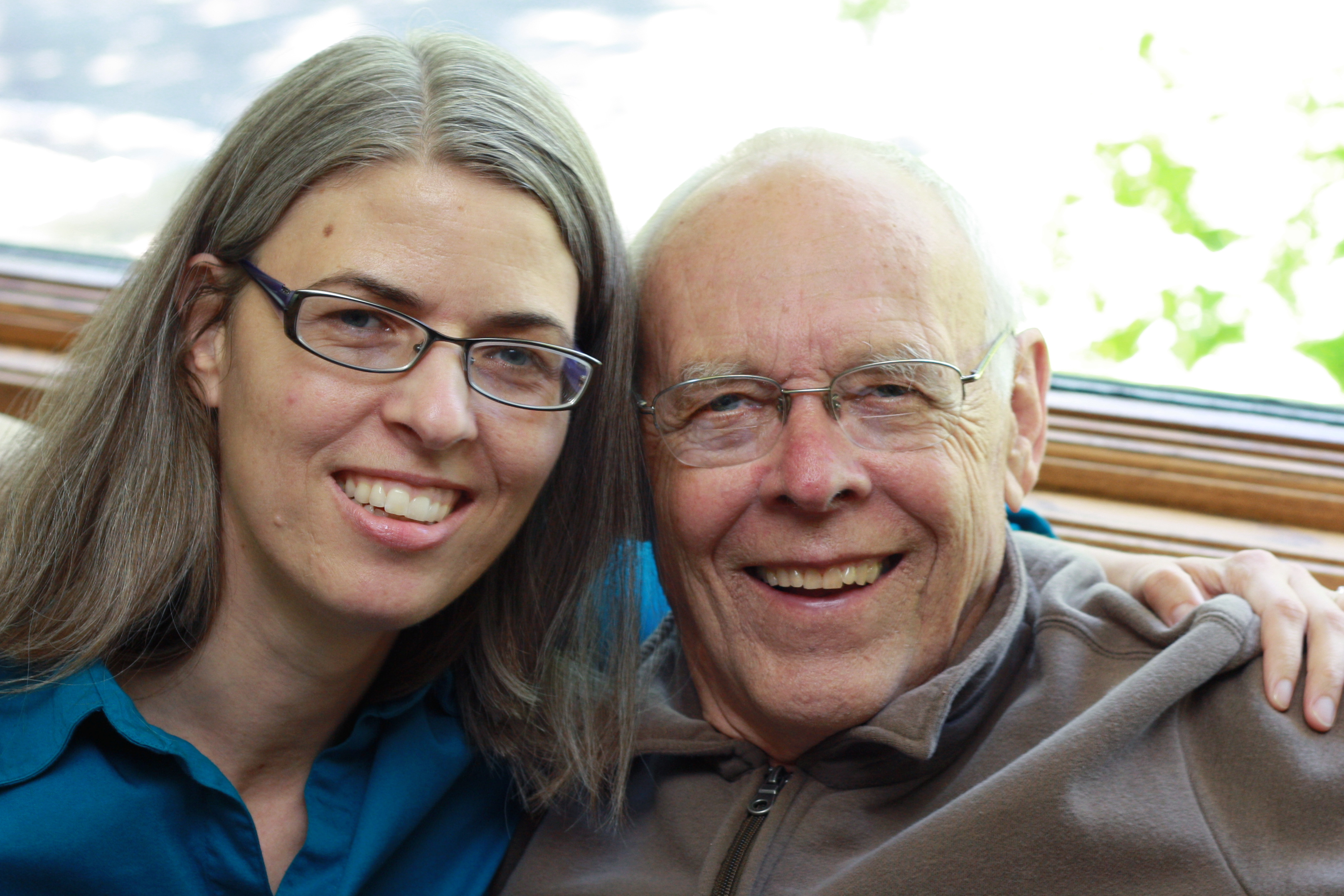
Me and my dad

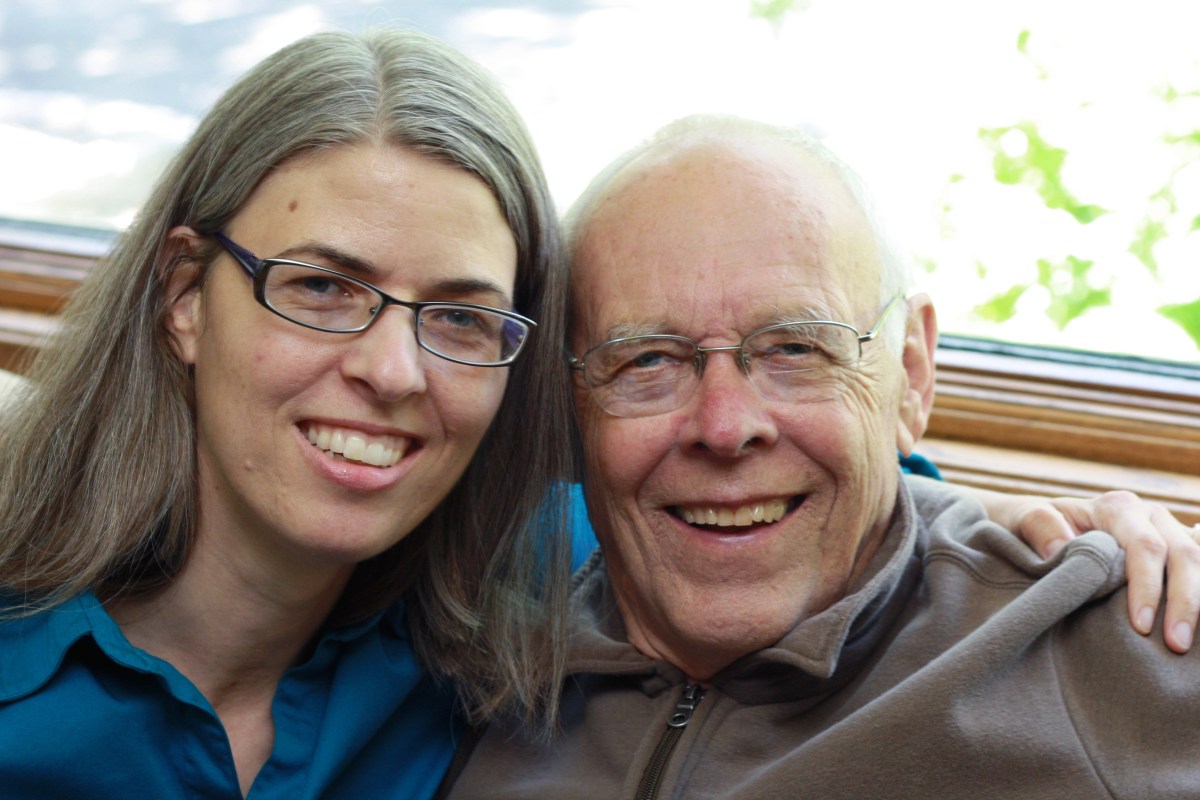
Me and my dadYou probably can’t predict when the reversal happens. I only realized it this week, after 44 years. The moment came when I was the one to worry about my father instead of just him worrying about me.

My father and I went out for a walk in his neighborhood to water plants for a friend who was away. As twilight fell, pastels spilled over the sky. The lake mirrored the dusky pinks and purples so we were awash in color as we strolled the half-mile distance to the neighbor’s house.

The path next to the lake was smooth with even, dark asphalt. His black-and-white dog sniffed and trotted by our side. She was not a puller. She gave him no trouble. Midway, I took her leash and it felt easy in my hands, as if I were just carrying a leash.

We crossed the road to walk up six blocks to the house where the thirsty plants waited. Cars started to use their headlights. Porch lights and street lights flickered on. We were almost to the house.

Once we arrived, he turned on the house and showered each plant in order. Marigolds, hanging plants, pansies, tomatoes. Each one got a drink. He looked at each plant as he watered it, letting the liquid soak into the soil.

There was no hurry in him. He focused and stayed quiet, moving from one to the next. He worked as if he had all the time in the world to care for this garden.

Once he finished, we decided to walk back through the neighborhood instead of walking down to the path by the lake. The sunset colors were gone. Every car had headlights on.

I listened to my dad’s footsteps. Worry gripped me. I saw uneven edges to the concrete sidewalk that could catch his feet. I noticed snake-like branches strewn about as tripping hazards. The curb seemed too high for comfortable stepping when we crossed streets. Grass patches threatened to be slippery.

***********

It was not always this way.

At 6’2”, he was a man others looked up to. He built a career that took him around the world from modest beginnings. His own father—my grandfather—had gone as far as 8th grade. My father hoped to finish high school and perhaps become a carpenter. A child of the Depression, he wasn’t afraid of hard work. He started delivering papers at age 11. Almost everyone took the paper in the 1940s. Then he worked as a brick layer and saved enough to buy his own car at 16.

He took a test in high school. Because of his test results, two people came from the school to his house. They told his parents—my grandparents—that he needed to go to college. He was too smart not to. My grandparents said OK and my dad enrolled at UCLA. Those two people—whose names we don’t remember—redefined his life.

After completing his engineering degree, he applied his intelligence to the world of work with a flourish. He holds about a dozen patents. During the years I was growing up, he was an executive.

In tailored suits and Italian shoes, he stood tall and strode with large steps. He took care of our finances and arranged multiple moves across the country when his work brought us to a new place. I was used to him being in charge. He was the most powerful person I knew.

Yet I doubt if he felt as powerful as he seemed. We’re hierarchical creatures, prone to look toward our superiors. Even as vice president of a company, he kept his eye on the president, board of directors and stockholders who wielded power over him.

I know he underestimated his effect on me. He had no idea that his influence was like the sun. I grew larger in his attention and wilted in its absence. Neither of us understood how much I needed him.

***********

It has only been the past 15 years that I have been able to see him for all that he is. He smiles and tells me how proud he is of me and his grandson.

Retirement has been good to him. Away from the pressures of rushing to catch planes and make meetings, he relaxes in the glider by the sliding glass door. He soaks in contentment. The sunlight drenches him while he sits, gliding forward and back, the lap blanket I crocheted for him on his legs.

A newspaper rests on the ground around him in sections. “This paper keeps getting thinner,” he says. But it doesn’t seem like he minds it. He accepts it as he accepts all the happenings of the world and in his body, including an inevitable skeletal shrinking. Now he grazes the 6-foot mark.

With every passing year, he becomes part of a rarer group, those who have seen more than eight decades.

Most of his friends are in their 80s like him so it’s getting harder to socialize. Some can’t make it up the stairs. Some are too ill to go out. Some struggle with dementia, day after day fading away from their own stories. About one friend, my dad says, “He used to be so witty. He used to make us laugh every time we saw him.”

That’s gone. Like the strength of youth we don’t know we have and vigorous relationships that feed us like thick oak tree roots.

With so many decades on earth, it gets harder to find the threads of thoughts and follow the strands of deep conversations. A quiet sets in.

“My mind isn’t what it used to be,” he says.

“Are you at peace with that?” I ask.

“Yes. I’ve had a good life. I accept that this is what it is to get old.”

***********

As we walk, I hear his breathing. The night announces itself and makes it known that the sun has left. My worry grows to uncomfortable proportions. I wonder how far away home is.

I take his arm to steady myself in my worry more than he needs me to take it. I want to be there in case of unforgiving sidewalks, slick grass and tricky sticks lying in wait to trip a gentle soul.

How much I wish I could always be there, at his side to defend against the ever changing world. It speeds up. Fat buildings crowd in against one another while the newspaper gets thinner.

We walk toward the house. I recognize the block and know we’ll see his yellow porch light soon to draw us near.

I can’t always walk with him. I have to go back to my own life of rushing and meetings. As I hold his arm and we walk toward home, I pray,

God bless this man, my father.
Keep him safe on his path.
Give him clarity and joy.
And if he must walk a difficult path,
give him strength.
And if he must face a blurry time of
fading,
give him peace.

God bless this man, my father.
May he know that his true home
is in my heart.

Broken hand to pray with (excerpt nine)

Good news! I reached my 10,000 words goal for July. I want to thank you for urging me on. Whether it’s a public comment on this blog or Facebook, a private comment or a quick word just mentioning that you got something out of my writing, you make this journey worthwhile. Your thoughts matter to me!

I thought it would be perfect to post this excerpt about turning 21 since this is the week of my 44th birthday. Enjoy!

**********************

Turning 21

The morning of my 21st birthday I woke up and looked out the sliding glass door that served as one of the walls of my room. Outside on the bench sat a mango.

It’s a mango from God! I thought. I slid open the door and held it in my hand.

The green fruit blushed with red on one of its curved sides. It gave ever so slightly as I pressed it. I knew it would be ripe and sweet.

In my first moments of being 21, I was happy.

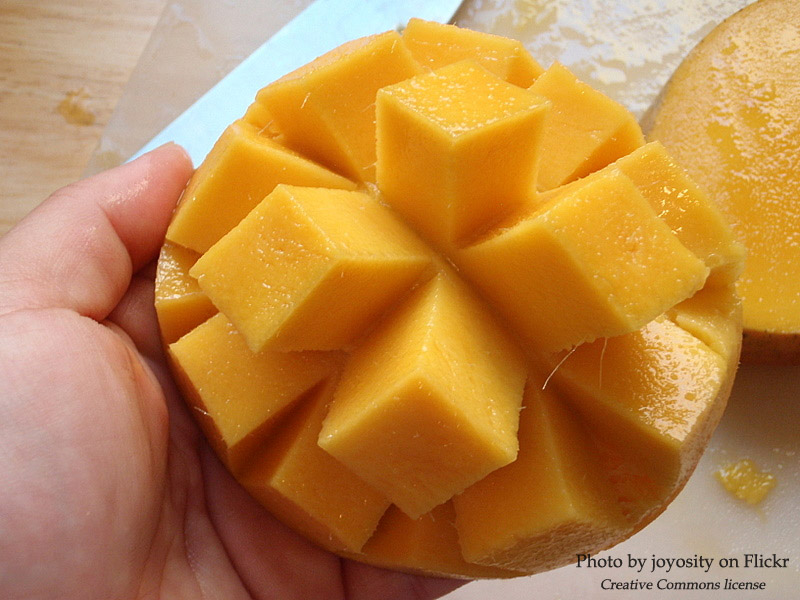
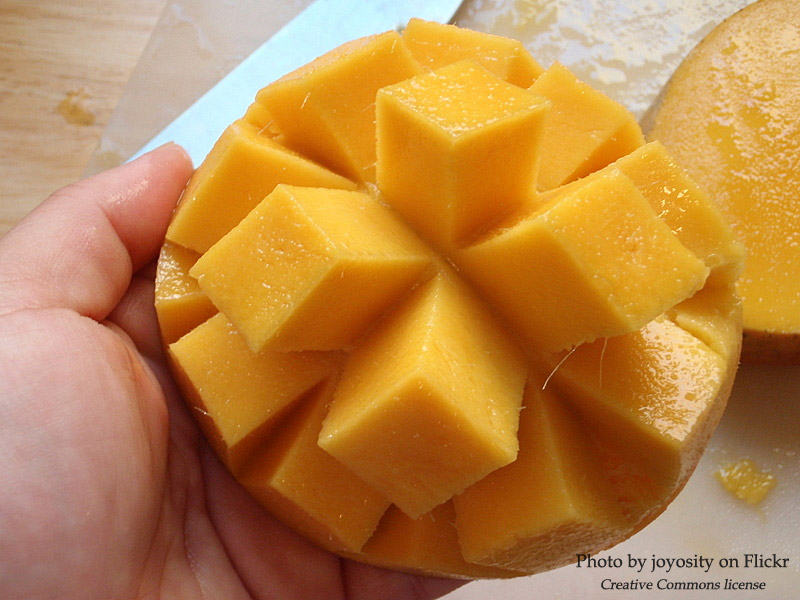
mangoI came to mangoes when I came to Santa Cruz. The view of my first mango at age 19 seemed unremarkable. Warren handed me the fruit. I held the green bulbous thing with a questioning look.

“It’s a mango,” he said. “Have you ever had one before?”

I shook my head no. Warren took the mango back and brought it into his kitchen. On the tile counter, he cut off one side of it and handed it back to me.

“Eat the yellow part.”

I bit in. The rich juice tasted of islands and sunshine. It covered my tongue with tangy sweetness, like an apricot and pineapple mixed together.

“Do you like it?”

“I think this is my new favorite fruit!”

From then on, I kept an eye out for mangoes in the market. In May, they dropped down to less than a dollar a mango and I gorged myself.

Warren said that you can’t waste a mango. You have to eat all the flesh. His family had a house in Jamaica with a mango tree.

“Even if all the mangoes on your tree ripen at the same time, you can’t waste it.”

I called the inner seed the bone and chewed all the fruit off until it was stripped of any goodness and left with frayed ends. The fibers stuck in my teeth. A mango made me appreciate floss.

There are some foods that are happy foods for me. I don’t remember any sad times eating them. Ice cream, popcorn and mangoes.

Later in the day on my 21st birthday, I found out Warren had left the mango for me, early in the morning before sunrise. I still believed it was from God. I was starting to understand that God worked through people.