Was it grace that made this afghan?

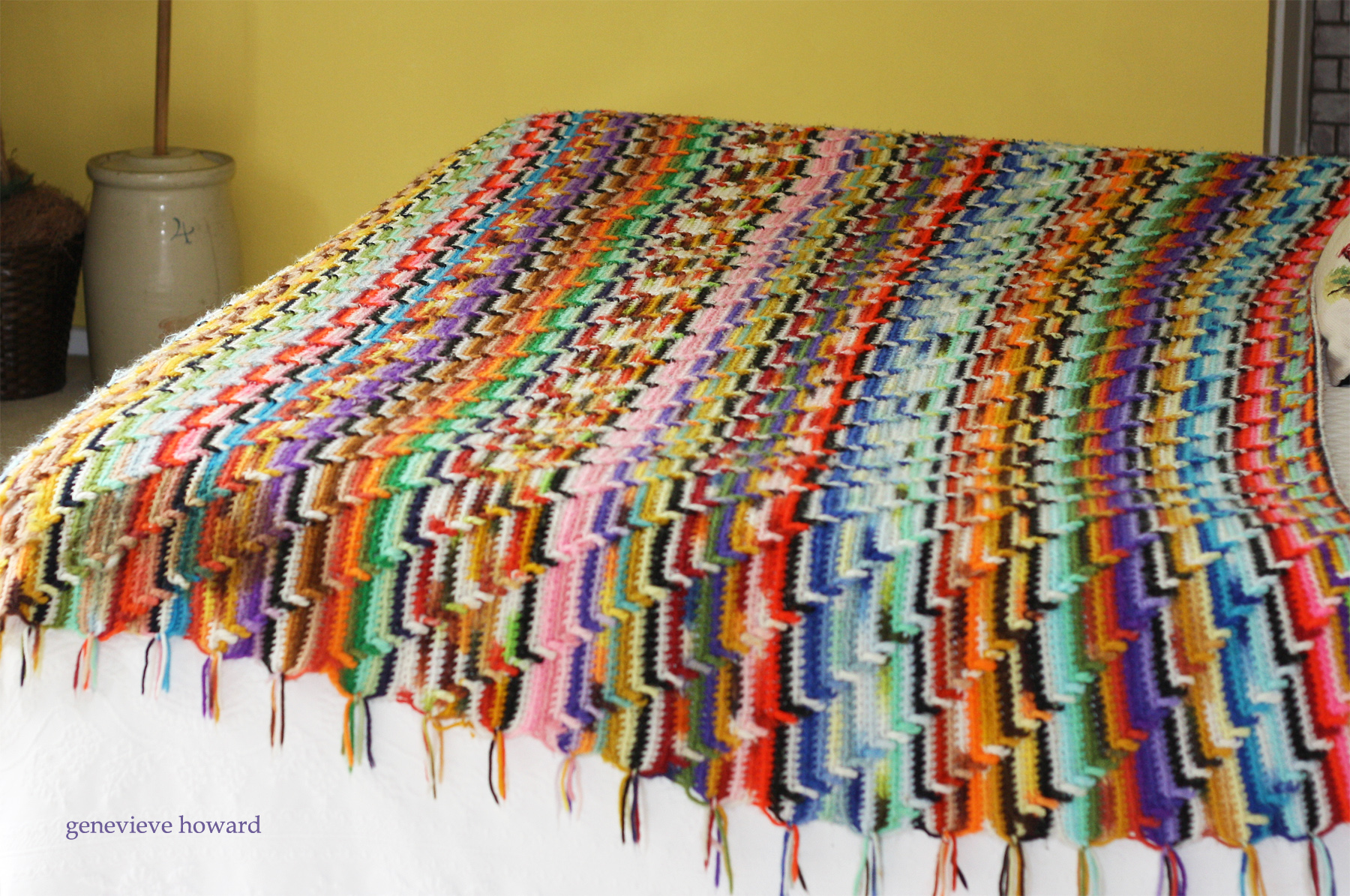
afghanI saw this afghan while visiting my dad. It was the afghan of my childhood, thrown over the back of the couch or folded in the corner, biding its time for winter when it would be used again.

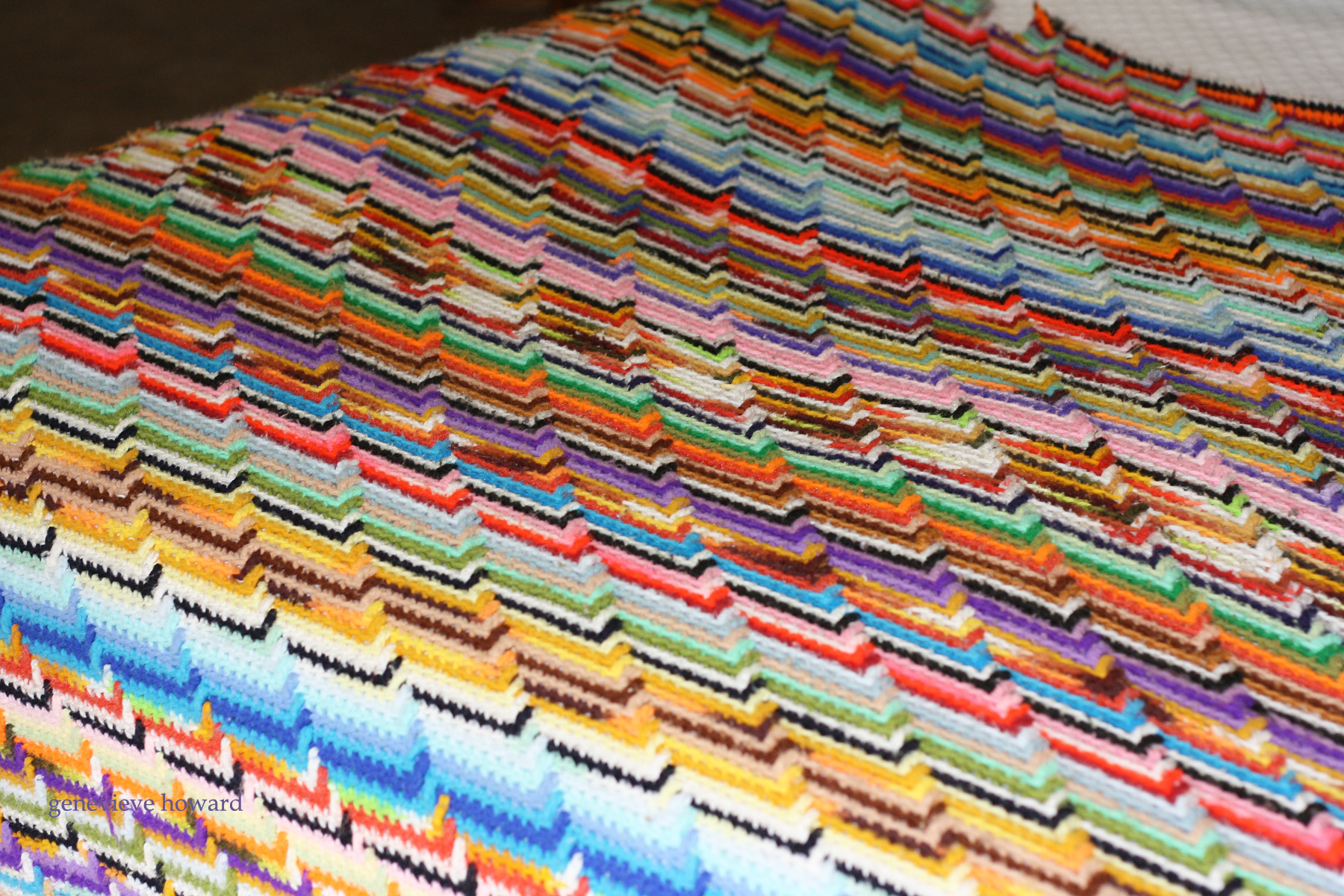
The colors jump out in vibrant combinations. A saturated holiday red with neon orange, mustard yellow and purple, tawny brown, baby pink, true black and icy white, snuggling together for a fantastic effect. The acrylic yarn—showing its origin of the 1960s—reflects a sensibility that cannot be found now.

I didn’t think anything of the afghan growing up. It had use but no particular value. It was one of thousands of items that filled our house, just one more thing in the living room, like my Atari. I didn’t question why the afghan was there or who had made it.

Then almost 30 years later, I saw it again on the back of my dad’s couch. Its outrageous colors caught my attention.

“The afghan!” I exclaimed as if running into an old friend. The 1960s cheap acrylic was tough enough to survive the decades.

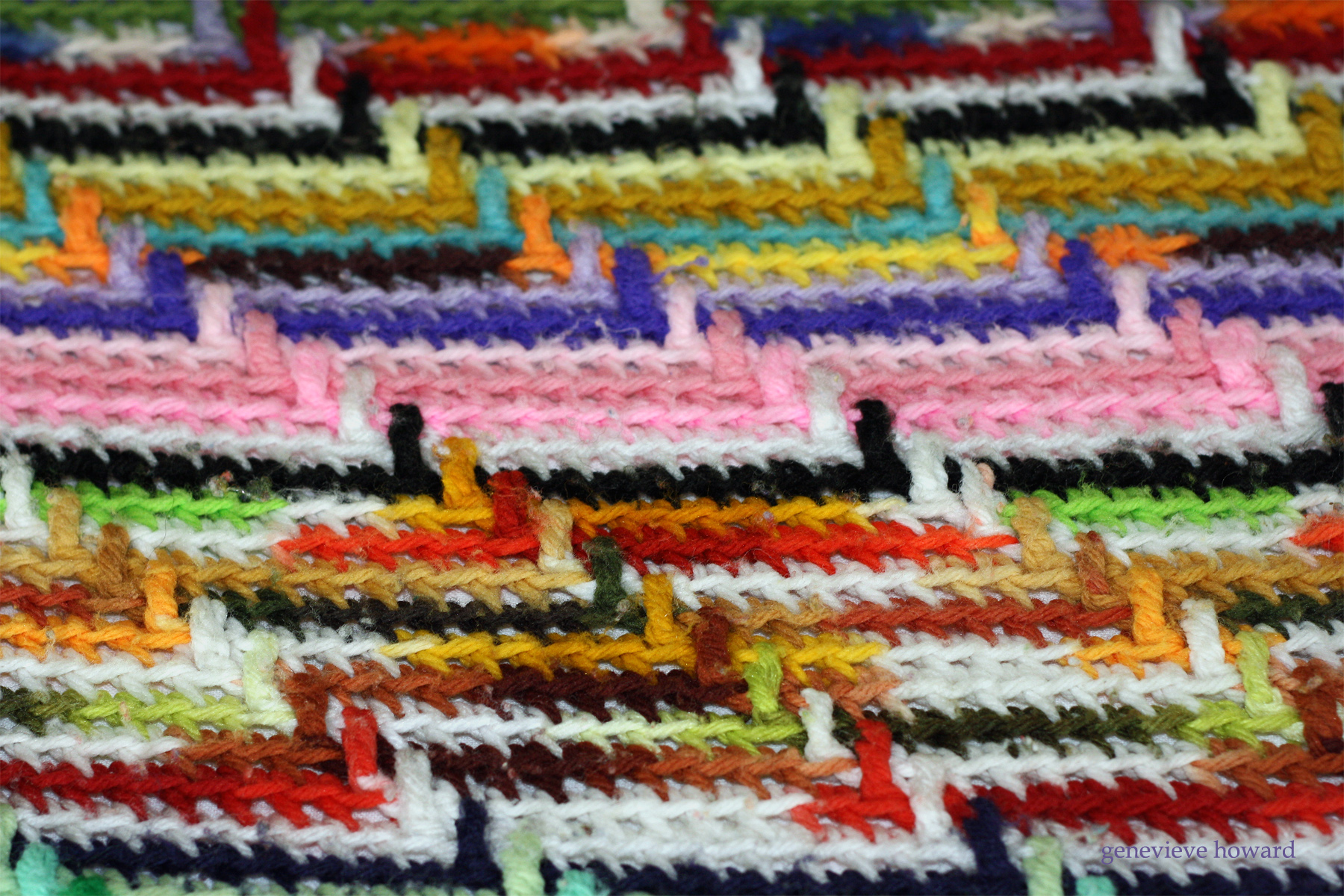
long-afghanI stretched it out to look at the stitches. Now that I crochet, I know more. I interpret the language of loops and understand hours of handwork. At first glance, I thought she had made spike stitches. When I looked at the back, I saw it was smooth. I realized she had done front post stitches, raised only on the front.

I counted and made note: 10 sc, 1 FP sc, staggering the raised front post stitch by one with each row. I saw the afghan with new respect.

Large enough to drape over a queen-size bed, I wondered about its maker. I asked my dad and he thought it had been one of his aunts, maybe his Aunt Cena.

Was she at peace when she made it? Was she content to crochet along, making thousands of stitches?

Later I talked to my sister who also had a family afghan of the same vintage. She told me the yarn wasn’t from many scraps, using up leftover skeins as I had imagined but instead from fanciful skeins sold in the 60s, the variegated colors ready-made.  She named off my grandmother’s siblings. She believed our Great-Aunt Grace—a sister by marriage—made the afghans.

close-afghanI know little of my family history. I have no family afghan. But I’m bound to all those who care and have cared enough to create. Items carry our spirit if not our name.

Grace—shown through generosity—makes each afghan. Even the strongest acrylic yarn will fade and disintegrate but grace goes on forever.

Grace is always around, like a family afghan. Not always noticed or appreciated but waiting for you. Find it. Wrap it around yourself. It will warm you, shape you and bless you, if you let it.

A prayer for my father who has never been taller

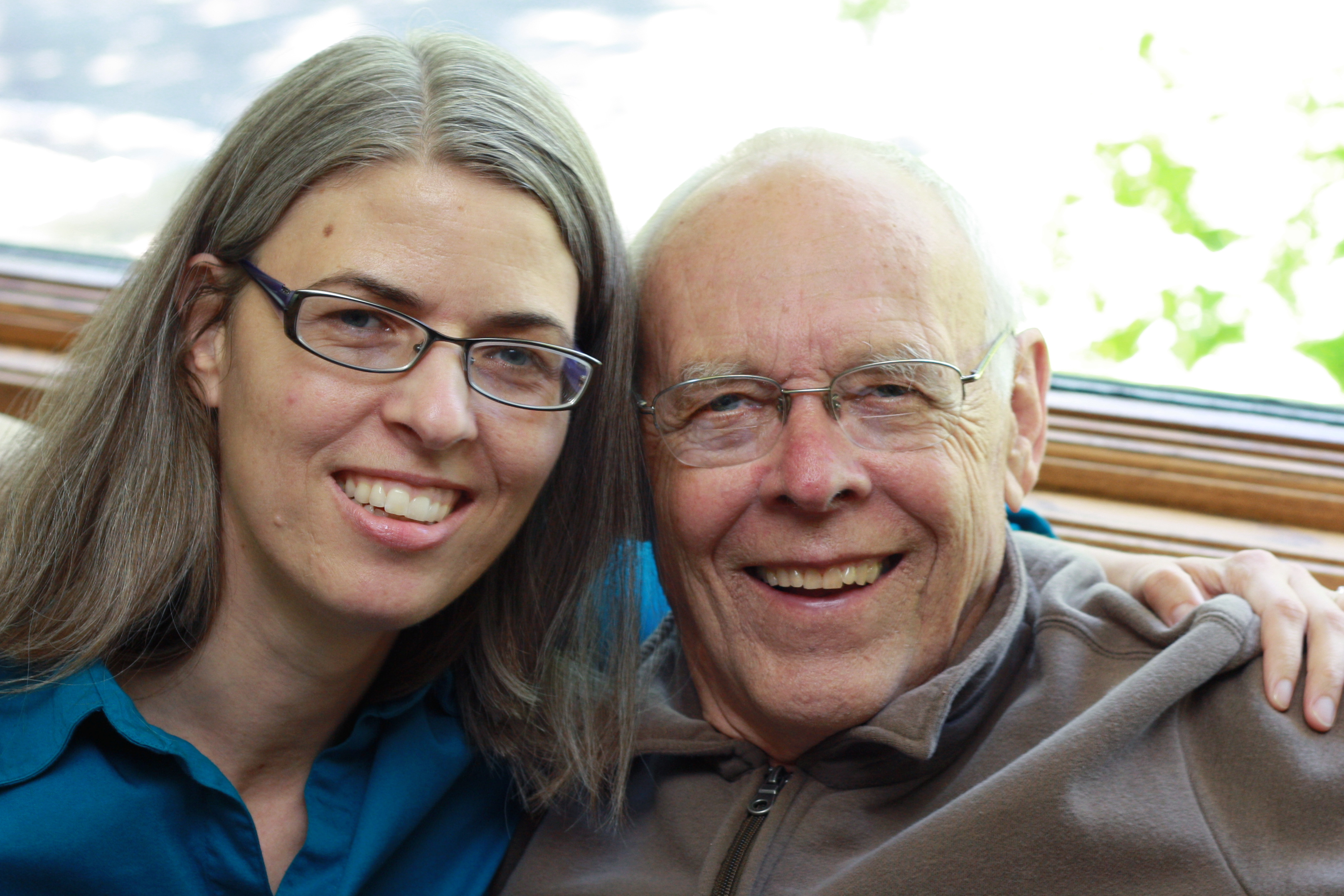
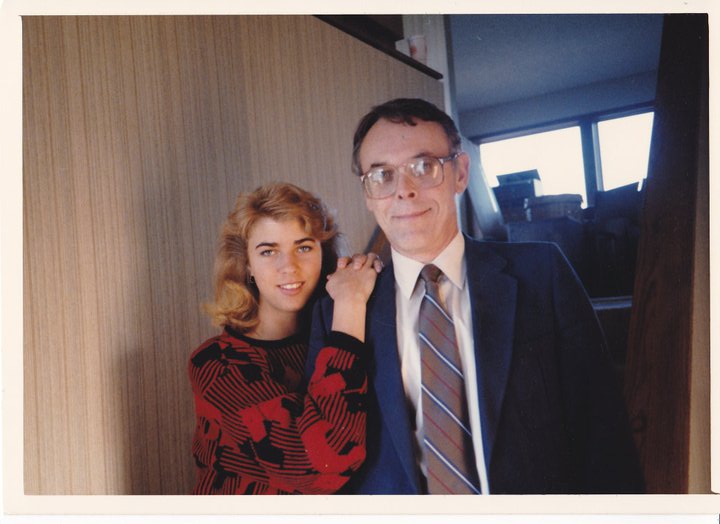
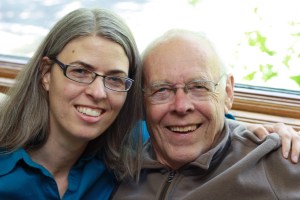
Me and my dad

Me and my dadYou probably can’t predict when the reversal happens. I only realized it this week, after 44 years. The moment came when I was the one to worry about my father instead of just him worrying about me.

My father and I went out for a walk in his neighborhood to water plants for a friend who was away. As twilight fell, pastels spilled over the sky. The lake mirrored the dusky pinks and purples so we were awash in color as we strolled the half-mile distance to the neighbor’s house.

The path next to the lake was smooth with even, dark asphalt. His black-and-white dog sniffed and trotted by our side. She was not a puller. She gave him no trouble. Midway, I took her leash and it felt easy in my hands, as if I were just carrying a leash.

We crossed the road to walk up six blocks to the house where the thirsty plants waited. Cars started to use their headlights. Porch lights and street lights flickered on. We were almost to the house.

Once we arrived, he turned on the house and showered each plant in order. Marigolds, hanging plants, pansies, tomatoes. Each one got a drink. He looked at each plant as he watered it, letting the liquid soak into the soil.

There was no hurry in him. He focused and stayed quiet, moving from one to the next. He worked as if he had all the time in the world to care for this garden.

Once he finished, we decided to walk back through the neighborhood instead of walking down to the path by the lake. The sunset colors were gone. Every car had headlights on.

I listened to my dad’s footsteps. Worry gripped me. I saw uneven edges to the concrete sidewalk that could catch his feet. I noticed snake-like branches strewn about as tripping hazards. The curb seemed too high for comfortable stepping when we crossed streets. Grass patches threatened to be slippery.

***********

It was not always this way.

At 6’2”, he was a man others looked up to. He built a career that took him around the world from modest beginnings. His own father—my grandfather—had gone as far as 8th grade. My father hoped to finish high school and perhaps become a carpenter. A child of the Depression, he wasn’t afraid of hard work. He started delivering papers at age 11. Almost everyone took the paper in the 1940s. Then he worked as a brick layer and saved enough to buy his own car at 16.

He took a test in high school. Because of his test results, two people came from the school to his house. They told his parents—my grandparents—that he needed to go to college. He was too smart not to. My grandparents said OK and my dad enrolled at UCLA. Those two people—whose names we don’t remember—redefined his life.

After completing his engineering degree, he applied his intelligence to the world of work with a flourish. He holds about a dozen patents. During the years I was growing up, he was an executive.

In tailored suits and Italian shoes, he stood tall and strode with large steps. He took care of our finances and arranged multiple moves across the country when his work brought us to a new place. I was used to him being in charge. He was the most powerful person I knew.

Yet I doubt if he felt as powerful as he seemed. We’re hierarchical creatures, prone to look toward our superiors. Even as vice president of a company, he kept his eye on the president, board of directors and stockholders who wielded power over him.

I know he underestimated his effect on me. He had no idea that his influence was like the sun. I grew larger in his attention and wilted in its absence. Neither of us understood how much I needed him.

***********

It has only been the past 15 years that I have been able to see him for all that he is. He smiles and tells me how proud he is of me and his grandson.

Retirement has been good to him. Away from the pressures of rushing to catch planes and make meetings, he relaxes in the glider by the sliding glass door. He soaks in contentment. The sunlight drenches him while he sits, gliding forward and back, the lap blanket I crocheted for him on his legs.

A newspaper rests on the ground around him in sections. “This paper keeps getting thinner,” he says. But it doesn’t seem like he minds it. He accepts it as he accepts all the happenings of the world and in his body, including an inevitable skeletal shrinking. Now he grazes the 6-foot mark.

With every passing year, he becomes part of a rarer group, those who have seen more than eight decades.

Most of his friends are in their 80s like him so it’s getting harder to socialize. Some can’t make it up the stairs. Some are too ill to go out. Some struggle with dementia, day after day fading away from their own stories. About one friend, my dad says, “He used to be so witty. He used to make us laugh every time we saw him.”

That’s gone. Like the strength of youth we don’t know we have and vigorous relationships that feed us like thick oak tree roots.

With so many decades on earth, it gets harder to find the threads of thoughts and follow the strands of deep conversations. A quiet sets in.

“My mind isn’t what it used to be,” he says.

“Are you at peace with that?” I ask.

“Yes. I’ve had a good life. I accept that this is what it is to get old.”

***********

As we walk, I hear his breathing. The night announces itself and makes it known that the sun has left. My worry grows to uncomfortable proportions. I wonder how far away home is.

I take his arm to steady myself in my worry more than he needs me to take it. I want to be there in case of unforgiving sidewalks, slick grass and tricky sticks lying in wait to trip a gentle soul.

How much I wish I could always be there, at his side to defend against the ever changing world. It speeds up. Fat buildings crowd in against one another while the newspaper gets thinner.

We walk toward the house. I recognize the block and know we’ll see his yellow porch light soon to draw us near.

I can’t always walk with him. I have to go back to my own life of rushing and meetings. As I hold his arm and we walk toward home, I pray,

God bless this man, my father.
Keep him safe on his path.
Give him clarity and joy.
And if he must walk a difficult path,
give him strength.
And if he must face a blurry time of
fading,
give him peace.

God bless this man, my father.
May he know that his true home
is in my heart.

Broken hand to pray with (excerpt nine)

Good news! I reached my 10,000 words goal for July. I want to thank you for urging me on. Whether it’s a public comment on this blog or Facebook, a private comment or a quick word just mentioning that you got something out of my writing, you make this journey worthwhile. Your thoughts matter to me!

I thought it would be perfect to post this excerpt about turning 21 since this is the week of my 44th birthday. Enjoy!

**********************

Turning 21

The morning of my 21st birthday I woke up and looked out the sliding glass door that served as one of the walls of my room. Outside on the bench sat a mango.

It’s a mango from God! I thought. I slid open the door and held it in my hand.

The green fruit blushed with red on one of its curved sides. It gave ever so slightly as I pressed it. I knew it would be ripe and sweet.

In my first moments of being 21, I was happy.

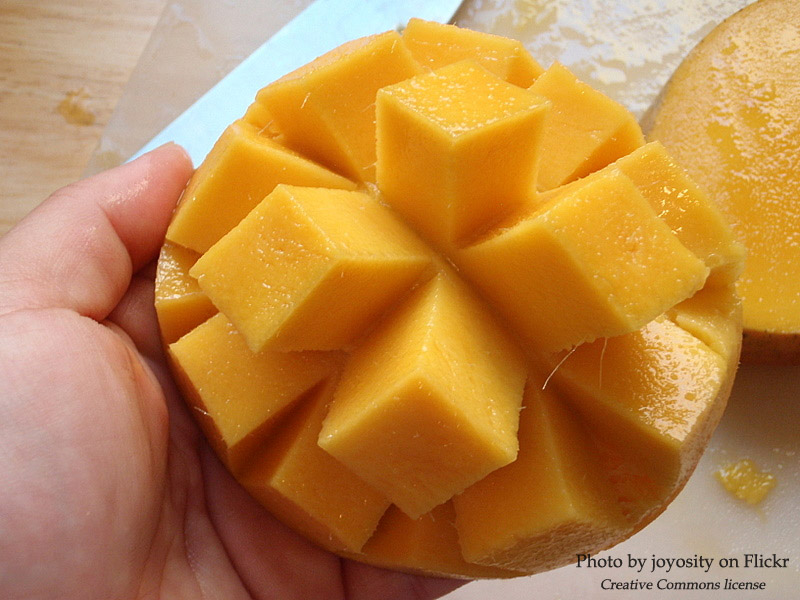
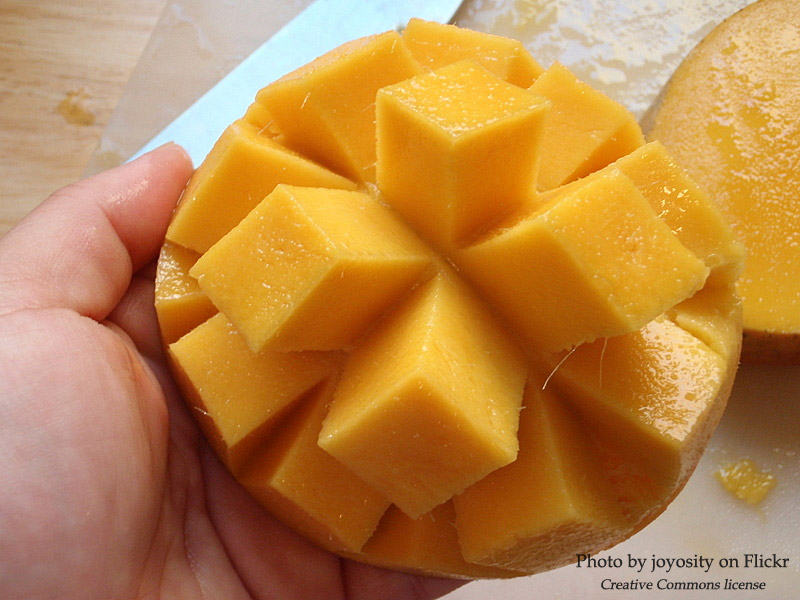
mangoI came to mangoes when I came to Santa Cruz. The view of my first mango at age 19 seemed unremarkable. Warren handed me the fruit. I held the green bulbous thing with a questioning look.

“It’s a mango,” he said. “Have you ever had one before?”

I shook my head no. Warren took the mango back and brought it into his kitchen. On the tile counter, he cut off one side of it and handed it back to me.

“Eat the yellow part.”

I bit in. The rich juice tasted of islands and sunshine. It covered my tongue with tangy sweetness, like an apricot and pineapple mixed together.

“Do you like it?”

“I think this is my new favorite fruit!”

From then on, I kept an eye out for mangoes in the market. In May, they dropped down to less than a dollar a mango and I gorged myself.

Warren said that you can’t waste a mango. You have to eat all the flesh. His family had a house in Jamaica with a mango tree.

“Even if all the mangoes on your tree ripen at the same time, you can’t waste it.”

I called the inner seed the bone and chewed all the fruit off until it was stripped of any goodness and left with frayed ends. The fibers stuck in my teeth. A mango made me appreciate floss.

There are some foods that are happy foods for me. I don’t remember any sad times eating them. Ice cream, popcorn and mangoes.

Later in the day on my 21st birthday, I found out Warren had left the mango for me, early in the morning before sunrise. I still believed it was from God. I was starting to understand that God worked through people.

Broken hand to pray with (excerpt six)

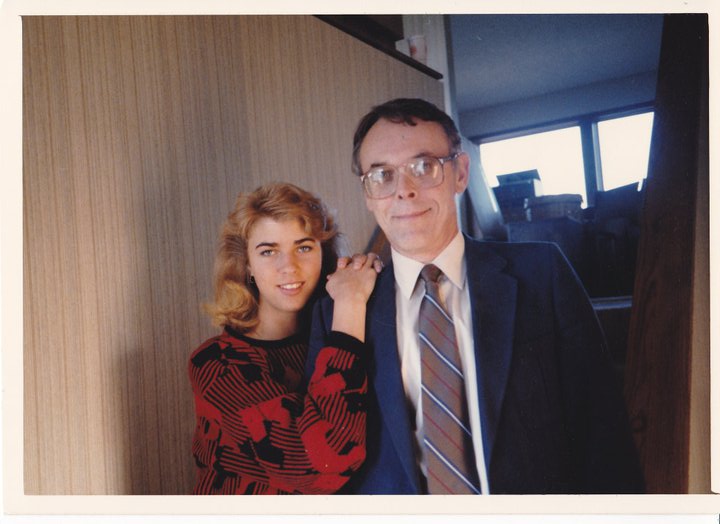
Gen and DadI’m putting my writing hours into the memoir so this month I’ll post raw excerpts from what I write. We’ll return to our regular blog posts in August.

Today’s excerpt is from high school, not the happiest of times for me, as you’ll see. I welcome your feedback and appreciate your support! Thank you for hanging with me as I tell my story—sad, ugly and trying as it was at times.

Broken hand to pray with (excerpt six)

High School Christians

There were those in high school who wore clean clothes and started a bible study group together. They stood smooth and uptight. They wrote one another notes with bible verses and words of encouragement. They went on mission trips that seemed like glorified vacations where they could bulk up their do-gooder resumes.

I was not part of this group.

Their problems seemed trivial to me, something to confess to one another as weakness but nothing too gritty or scary. This one had argued with her sister. Another envied her friend’s car.

“We’re all sinners,” they said but in the way that left no doubt that some–like me–had more sinnerness than others.

Their saccharin attitudes alarmed me.

Christians, I decided, were fake, sugary mouth-talkers. They acted earnest but were meaner and more judgmental than anyone. They made it clear that they knew who was saved and who was going to hell. By an amazing coincidence or convenience, they were the ones who were saved. Their teaching about loving your neighbor seemed conditional. Love your neighbor unless she is too weird, slutty or badly dressed to be loved. In that case, talk about her.

They smiled as they took out their words to cut people down to size. They looked down on me, living in sin with a boy, and gossiped about our relationship.

“They’re fornicators,” one said in a whisper to the other when my boyfriend and I walked by hand-in-hand. Then she looked up and caught my eye. “Hi!” she said with a bright smile and embarrassed look.

Go fornicate yourself, I thought.

I felt outside of them.

I would never be so clean. I would never fawn over my daddy and want to be like my mom. I wouldn’t know when was the right time to wear white shoes.

I would never belong. I would never feel so sure of my place as God’s favorite, so secure in my supremacy.

They seemed to own God, part of a group who lived in an illusion, the Youthful Christian Club where I wasn’t welcome. They shook their head when they looked at me.

I answered their disapproval with tighter clothes and deepened my kisses with my boyfriend in the hallway. I pressed my tall litheness on his long muscular form against the lockers. I kissed him hard to dismay the Christians and their prissy sensibilities.

Even with my eyes closed, I could hear them tutting as they walked by.

Pleasure, distraction and obsession became my religion. My only focus was my boyfriend and how I could keep him. I was possessive, jealous and crazy. Trying to tame the violence and lust of a strong eighteen-year-old boy was a full-time occupation. I was crushed when he flirted with other girls and furious when he passed out in the afternoon from too much mid-day partying.

His temper made holes in the walls where he punched next to my face. Flecks of drywall scattered through my permed blond hair. I swore I would end it the next time he punched me or kicked me. Yet each time it happened, I felt I deserved it.

How could I live without him? I didn’t want to live alone. I couldn’t live alone. I could barely live.

It was hard to breathe.

Every day was chaos.

In the swirl of drugs, liquor and an abusive relationship, I continued to live on my own, go to high school and work at my job. I consider this fact proof of God’s grace in my life despite my lack of membership to any visible group of Christians.

I didn’t die. No matter how bruised, bloated and bewildered I was, by God’s grace I kept going.

Praise God! I’m a loser

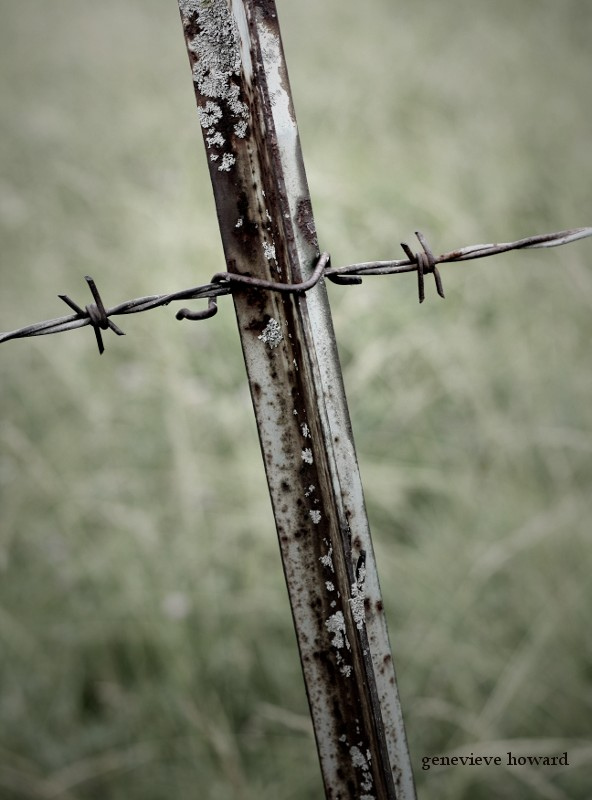
crossHe makes the winning touchdown and makes a gesture toward the sky, looking upward.

The band comes onstage to accept the gold award and says to the glamorous audience, “This is for the glory of God—praise Jesus!”

The child lives through a bout of double pneumonia and the good news goes out in text messages starting, “Praise God! He’s breathing on his own!”

I’m all for visible gestures of faith. It’s good and right to dedicate our successes to something higher than ourselves. We relate best as humble people rather than selfish, superior beings. I’m not against the gestures but I have to wonder, is it too easy to give praise when we feel blessed?

What is our praise worth if we give it when we’re feeling like winners?

The other side

Do we see the losing team thanking God, transforming their effort and the opportunity to play into a devotion?

How do we learn about the faith of artists who are never recognized publically but still use every fiber to express their human experience?

Can we still praise God during a late night in the pediatric intensive care unit when the child dies in the room next to the child who lives?

Is our praise conditional?

Losing

When I look at the course of my life, and the balance sheet between wins and losses, successes and failures, it would fall on the side of more losses and failures. Success is sweet but it takes many tries to get there. It lasts for only a moment.

There are the big losses—of a parent, relationship, pet or job—but many more small losses, daily losses, like a friend who disappoints you, a misunderstanding with your spouse before you leave for work or rejection where you wanted to belong.

Can we still give thanks and praise when our blessings aren’t obvious? 

Do we trust God and give praise now for blessings we’ve had and blessings still to come?

I would like to be that kind of person, who opens my heart to grace in every moment. Let me live as a person who praises, rather than judges each situation as good or bad, worthy or unworthy of my gratitude. I want to wake up and see there is goodness and sweetness in the hardest of times.

I leave you with this prayer.

Help us smudge the line between praising and breathing
so our life becomes a song.
Let us give thanks in our losses.
Praise God! We’re in the game

Four points of prayer shawls

If you enjoy the spiritual dimension of crafting, you might enjoy my book, Creative Women’s Devotional: 28 Reflections for Christian Knitters and Crocheters.

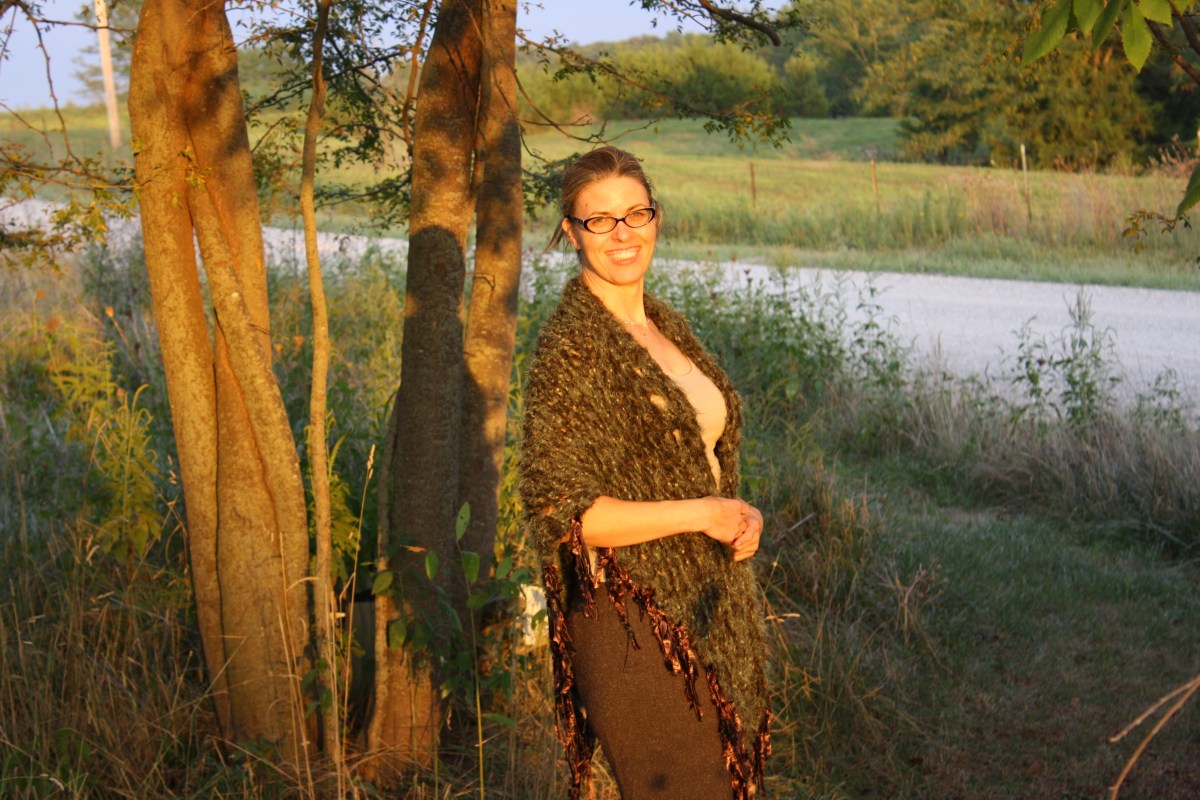
Gen in prayer shawl

Too often things made by hand, and especially women’s arts and crafts, are relegated to the trivial. Prayer shawls elevate something simple to a tangible gift of depth and meaning. After learning the four points of prayer shawls, you’ll understand the act and importance of making, giving and using prayer shawls.

Invitation to Art Show May 21

Come see for yourself! I invite you to see and touch my prayer shawls during the upcoming MU Staff Art Showcase May 21 from noon to 1 p.m. in Ellis Library, upstairs in room 201, University of Missouri campus. The art show runs from Tuesday, May 21 through Thursday, May 23 if you can’t make the opening. Parking for those off campus is available behind Memorial Union with metered spots (enter from University Avenue to go behind Memorial) or on the top level of Turner Avenue Garage.

When hard times threaten

Imagine you’re facing a hard time in your life.

You are looking at a difficult health situation like cancer or a tough change like a break-up or job loss. You’re not sure where the happy, healthy you is.

You might be feeling the pinch between the time you have to give and the time needed to meet all the requirements of your life. You feel the pressure to be a good parent, a patient caretaker or a reliable friend.

It might be that you wonder if you still matter. Maybe there are other more vibrant people around and you feel faded in comparison.

Comfort for hard times

What you need is an arm around your shoulder and a sense that you’re blessed in all your circumstances, good and bad, bright and dark. You need to know the loving hand of the holy holds you.

What can give you a feeling of protection and comfort? What is a tangible reminder of the spirit?

A prayer shawl made from love, yarn, time and prayers infuses the wearer with warmth in body and spirit.

Four point of prayer shawls

1. Prayer shawls heal the maker

Research shows that doing a repetitive and rhythmic action with your hands such as knitting and crochet has psychological benefits. You have less stress and experience a sense of calm while doing crafts. Combine this action with the contemplative practice of prayer and you have a powerful way to bring body, mind and spirit together.

As a maker, you focus on the moment. When you concentrate on the present, you open yourself to a fresh source of energy. Both prayer and craft combine to draw you out of your worries and into your deeper self.

2. Prayer shawls heal the receiver

As a receiver, you have a healing item to wrap around you. With a gentle weight and cozy curl around your shoulders, you can rest secure in the knowledge that someone took time to make a gift for you. All the prayers, thoughts and hopes that went into the stitches surround you. A prayer shawl around you allows you to feel safe and valued.

You can always have a hug from your friend even if she’s not there. You can put on the prayer shawl when you meditate, want to feel inspiration or need a reminder that you’re loved.

3. Prayer shawls connect the past to the present

We live in a time of rushing, selfishness and distraction. How often are you late for something? How often do you only give someone half of your attention—if even that much—because your mind is already gone to the next place you need to be? Or because you’re out of practice, you don’t pay attention to anything anymore? The act of stopping to sit and crochet while praying on each new loop brings us back to a time when the pace of life was humane. It does us good to slow down and think stitch by stitch, prayer by prayer. It builds our depth of concentration.

In moments of contemplation, we hear the song of the spirit and see ourselves as a small part in a greater whole. Someone made the yarn, someone transported the yarn, someone sold the yarn, someone made the prayers that made the shawl and someone accepted the gift of the shawl.

The texture of yarn sliding through our fingers as we loop it together reminds us that making something by hand is an ancient art, as old as humanity. We haven’t always lived in an industrial, technological age with machines embedded in our lives and devices stuck in our hands. It helps us to have the flexibility of fiber between our fingers, rather than only the flatness of screens and rectangles.

4. Prayer shawls embody the power of simplicity, prayer and caring

A shawl is a simple form of clothing. Women often used shawls so they could stay warm and nurse their babies easily. Many cultures use shawls as protection because they can be fashioned into different items as needed, as a cover from the sun during the day and then wrapped around the neck and shoulders at night. For thousands of years, shawls have protected and decorated us, from the ancient Israelites to modern-day women dressed for a summer wedding.

Prayer can also be simple. A call to the divine can be one word, said with intention.

Caring about someone else is a pure act. To want good things for another brings us out of our selfish concern and focuses our mind on community. Generosity helps everyone. Making an item and giving it away is a bigger stretch than any purchase.

Combine a simple piece of clothing with prayer and affection. Give it away. This is the prayer shawl.

Would you like more information on prayer shawls?

Shawl Ministry

Nancy Monson, Craft to Heal

Blessing

I leave you with this blessing, knit in words, a prayer shawl made of letters for you.

May you feel the presence of God in
hands of the holy on your shoulders with
warmth and weight to feel steady.

In this moment, you can rest.
Your shoulders drop and you relax.

Let the arms of love wrap you
snug to know you’re valued.
You are loved.

May you be at peace in this moment,
the peace of kind hands and wise souls,
the peace of a quiet evening
next to the river where
spring peepers call and starlight gleams,
the peace of friendship offered and accepted.

Peace be with you.

Broken hand to pray with (excerpt five)

Memoir update

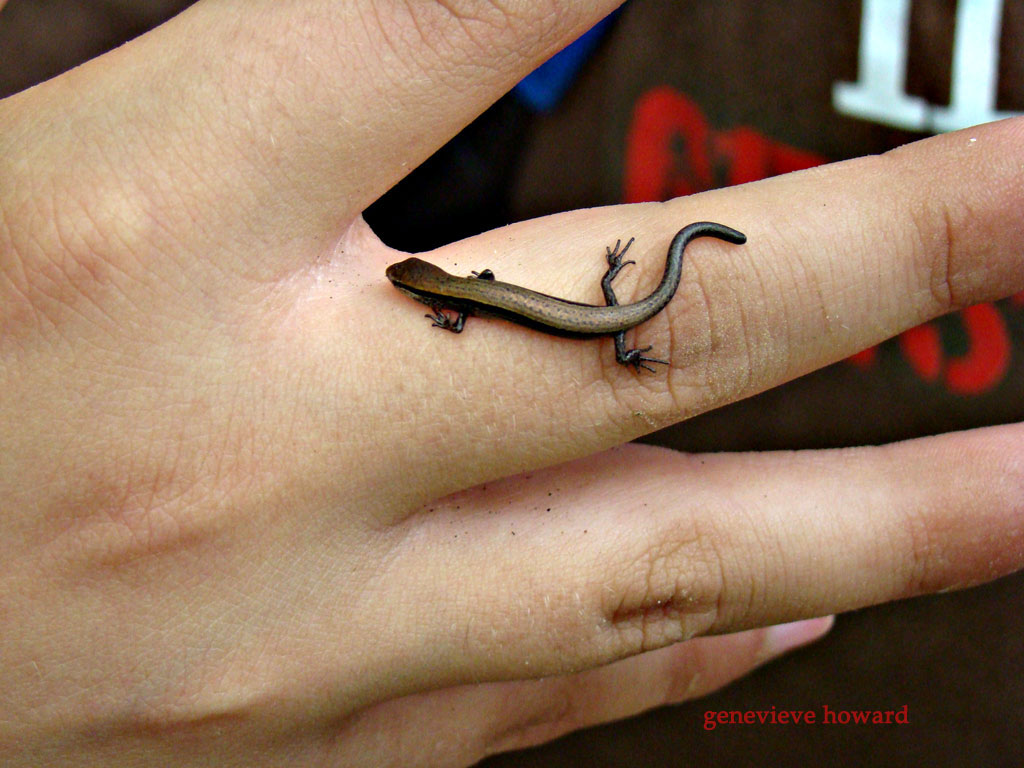
newtGood news! I reached my goal for 25,000 words in April toward the memoir. My two writing friends also reached their word count goals.

This go-round, I used Scrivener writing software (free trial from Literature and Latte) to lay out the book before I wrote. Wow! It was a world of difference to have an outline and a plan before I wrote.

I wrote about half the speed I did in November. It could take me hours and four cups of tea to get to 1,000 words. It might be the difference between free writing (November-style) vs. writing something another person can make sense of (April-style) but I’m happy with what I have from both times.

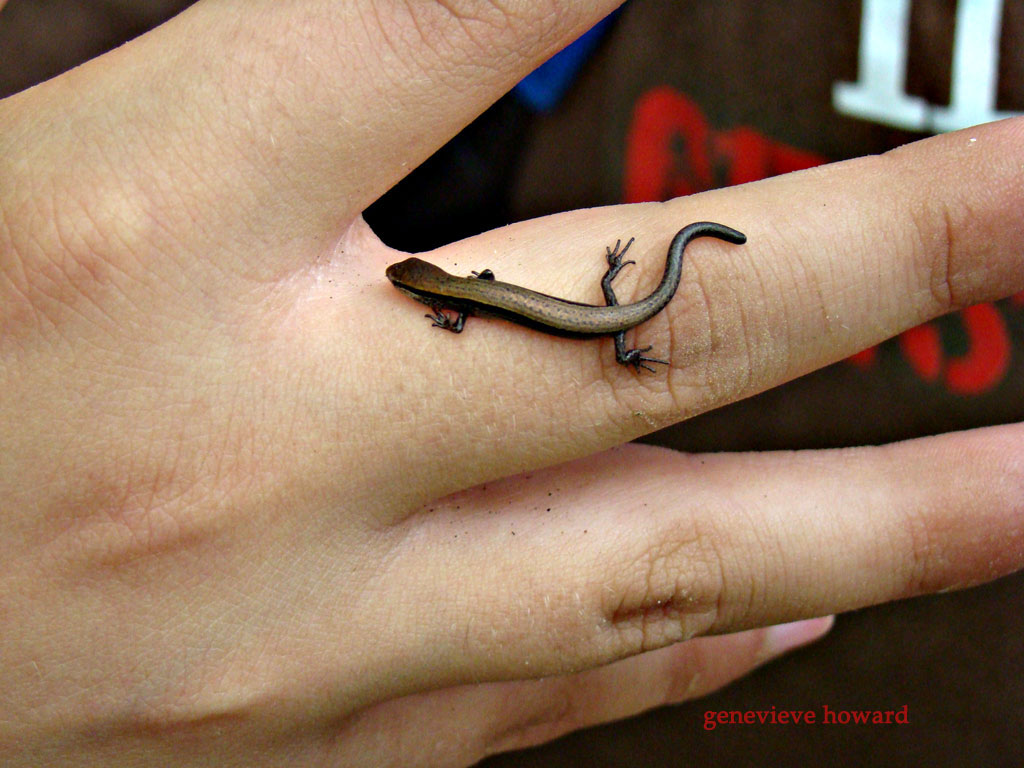
I’ll take my draft from November and fill in pieces of April’s draft and see what I end up with. For example, I really liked what I wrote about my childhood newt in November. (You had a childhood newt, too, right? Doesn’t everyone?)

Thank you, everyone, for the encouragement. Your belief in me and my story means more to me than you know.

I’ll keep writing and editing the memoir. I’ll let you know how it goes.

Next week we’ll return to regular blog posts!

Wishing

As we were wiping up at the end of our shift, Mike asked, “You need a ride, hon?”

I said that I did. We made plans and punched out with our time cards on the top of the time clock.

Out in the night air, we walked together to Mike’s red sedan. He opened the passenger door for me.

He drove me up to the 24-hour truck stop just on the edge of town.

We slid into one of the booths. We looked over the stained paper menu

“What looks good?” he said.

“It is after midnight, so I guess technically it’s morning. Maybe I’ll get some breakfast,” I said.

“Breakfast does sound good,” he agreed.

We ordered full breakfast platters and we weren’t disappointed. Our gum-chewing waitress served us long ovals plates of fried eggs, shredded hash browns, hardened bacon strips, shiny sausage links and toast cut into six triangles with a scoop of light margarine on top. Drops of grease dotted the plate edges.

At the counter, a truck driver leaned over his food while his cigarette sat in the ashtray. Outside his truck lights glowed in the mist coming off the St. Croix River next to the diner. He made small talk with the waitress and the cook behind the metal counters.

Mike and I ate our food and laughed. We pretended to fence with our bacon; it was as stiff as swords. He teased me for putting sugar and creamers in my coffee and I called him crazy for drinking it black.

We finished our meal and left the waitress a huge tips. People who have worked in service leave the biggest tips because they know how hard the work is. I can always tell when someone is stingy with the tip that they are spoiled and don’t know what it is to have aching feet.

He opened the car door for me. As we drove, I looked through the patches of cloud and saw a shooting star.

“Quick! Make a wish!”

We talked about shooting stars.

“You know they’re not real stars, sweetie.”

I didn’t. I was disappointed to learn I had been wishing on space debris all that time. But if there was anyone who was going to tell me the truth about shooting stars, I wanted it to be him with his soft eyes and gentle voice. He didn’t tease me for being stupid or not knowing much about how things worked in the world.

“Keep wishing, Gen. Keep wishing on them and hoping for things in your heart. That’s one of the things I love about you, how you get so excited and wish for things.”

* * *

I still wish on stars, 25 years later. Even if it is on space debris, I’m still making wishes. I still hope for things in my heart.

Broken hand to pray with (excerpt four)

The boogey man

“The boogey man’s gonna get you!” he said.

I was never exactly sure what the boogey man was. I imagined he was tall with long, strong fingers, quick to grab little girls’ legs.

Our house was two stories. Upstairs we had our kitchen, living room, the bathroom, my parents’ bedroom and my room.

Downstairs was the potting studio that opened out to the pool. My father had his own den with dark wood paneling. It smelled of pipe smoke and leather.

My sister’s bedroom was downstairs. It was a tie between her room, and my brother’s beneath the garage for most interesting place.

Her room had a jewelry collection hanging in front of her vanity mirror. The room always had a lingering scent of her spicy musk perfume. The perfume bottle top had a leopard fur button for spraying. She had a saffron yellow dress full of tiny round mirrors from India and a bright purple scarf draped around. She was 13 years older than me and without question, the most exotic person I knew. She seemed to always be leaving, leaving for a date with her boyfriend, then leaving for college when I was four.

My brother’s room smelled of aquarium and teenage boy sweat.

“Stop, you’re gonna overfeed them!” he said as I crumbled soft orange fish flakes over the tank top. I couldn’t help myself. I loved to watch their lips breaking the surface and pinching at the food that smelled like salty shrimp.

He had painted pterodactyls on his walls and they swooped down in a prehistoric sky. The aquarium bubbled. He usually had on the radio, the TV or both. He liked background noise to distract him from the constant whine in his ear, the tinnitus he developed after a bad dive.

I spent many times running up and down the stairs. I never knew when the boogey man would get me. I ran downstairs and GRAB! The boogey man got me! I shrieked! Then I heard my brother’s laugh and I ran down the rest of the stairs. He swept me up and spun me around.

“Better be careful!” he said.

*  *  *

Orange memories

orangeI sat at the table working on my penmanship and spelling. I had sheets of the thin lined paper with red lines for the top and bottom of the letters, and dashed blue lines for the middles.

I had an easy time with some words. Cat, house, man, mouse. But orange seemed like an impossible word. I couldn’t spell it out and I couldn’t make any sense of how to order the letters.

My brother sat down with me at the kitchen table.

“I’ll help you,” he said. “First, draw an orange. Make a circle.”

I made the o.

“Then, think about something you like to do, running. Oranges give you energy to run. What did you do after you ate an orange? You ran. Write ran.”

I added the ran. oran

“Now, you like oranges so much, they have the first two letters of your name. Write ge.”

I put them on. orange

From that day he taught me, I have always spelled it in three pieces. I draw the o, the ran and the first two letters of my name.

I never misspelled orange again.

I haven’t forgotten.

Broken hand to pray with (excerpt three)

Candlelit prayers

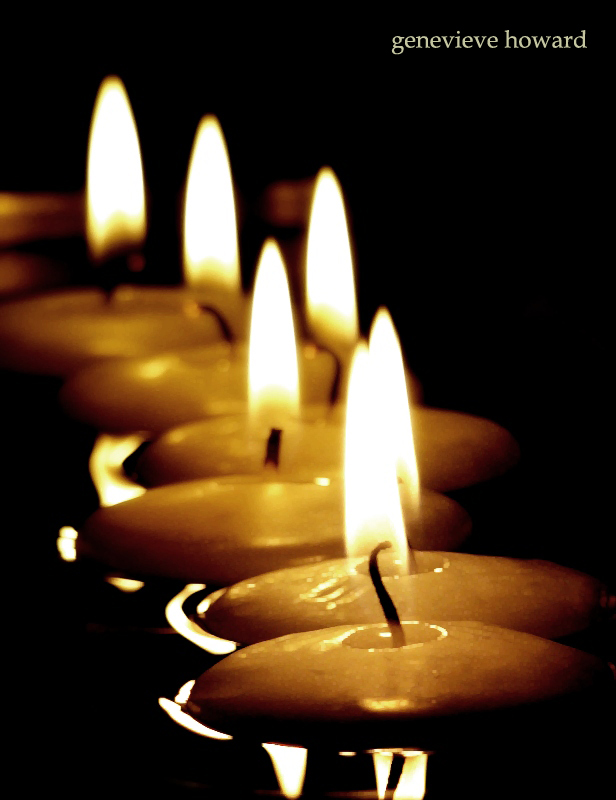
candleAt St. Luke’s, I had a sense of belonging and a job. I was an acolyte. Before the service, I pulled on a white robe and got the brass candle holder that was almost as tall as I was. We made sure the wicks were trimmed.

The service started and it was a feast for the eyes and ears.

Father Jacobs wore floor-length robes, hand-stitched in gold thread in intricate patterns. We sang hymns from the hymn books in front of each pew.

Our noses took in the spicy incense wafting from the brass holder that Father Jacobs swung.

When it came time for Father Jacobs to read from the enormous bible in the aisle, the other candle acolyte and I stood on either side of him with our candles. Our official name was the Torchbearers.

The candle light wasn’t necessary. The bright walls and the stained glass windows kept the church bright. But holding the candle was an important duty.

We sat in a special pew next to the altar. As wiggly eight-year-olds, our attention drifted from the service. We couldn’t resist whispering and cracking ourselves up. The pressure of trying to be quiet made an ordinary comment funny.

Another priest might have fired us as acolytes. Too giggly! Too silly! We could be called. But Father Jacobs answered our giggles with a calm smile and patient look. We settled into the pew and watched the service again.

His kindness quieted us more than another’s anger could have.

I was an acolyte for less than a year but my time serving affects my life today. I still love candles. I carry his kindness like a torch. Not everyone needs it to live by but I offer it just the same.

*   *   *

My mother was a believer in candles. We could walk into any church or cathedral, and if there were candles to be lit, she would light one. St. Luke’s had a place to light them.

The candles were stair-step rows, some flickering from previous people lighting them, some fresh and unlit, some empty of wax with just the wick holder.

She dropped a coin in the box attached in the front and gave me one to put in. My coin clinked as it fell on top of other coins inside. A quarter was a whole week’s worth of allowance and seems like a lot to me for a little candle. A quarter was a significant amount in 1977, as gas was about 65 cents a gallon.

I don’t know what she prayed for. She never said.

She took the punk from the sand and found another candle to light it, then she lit her candle and passed the smoldering stick to me.

“Say a prayer when you light it.”

As a girl, I mixed prayers up with wishes. I imagined the candles at church were the same as candles on a birthday cake, except instead of blowing them out, you light them. I lit the candle and made a wish.

Then we stood. She watched the white candles burn and move. I stood next to her, waiting, not knowing her thoughts.

I was still at the age when I was willing to stand at her side even if I didn’t know what was going on, or how long it would take. I was willing to wait with her then.

Broken hand to pray with (excerpt two)

bruce

Riding Bruce’s motorcycle

bruce

(This excerpt is dedicated with love to the memory of my brother, Bruce 1957-2010)

I had my own motorcycle helmet as a child. It was blue with gold flecks.

I was as happy as a dolphin leaping when my brother Bruce told me to go get my helmet. It meant a motorcycle ride.

I put on the black strap under my chin and climbed on behind my brother.

He rode his motorcycle all through the hills and roads of Southern California. I held on for the ride.

He wore a button-down cotton shirt and I grabbed the fabric at his sides as if they were handles. My canvas tennis shoes barely rested on the back pedals.

The wind blew my hair back. I felt fast and strong.

The sound of his bike purred as he opened the throttle. It was a small bike as motorcycles go but I was five years old and the engine seemed more powerful than anything else I knew.

We wound around curving roads that climbed past gated houses. Evening fell. He took me to the top of a hill.

He stopped the bike and turned off ignition.

“Climb down, Genny,” he said. “Let’s take a break.”

With his motorcycle leaning on its kickstand, we stood and looked at the bright and glorious sight that was Los Angeles in 1974.

The city lights glimmered gold as far as I could see. Ocean air mixed with the eucalyptus trees.

For as much as my mother liked talking, my brother liked silence. I could sit for hours with him watching TV and we wouldn’t say a word. We stood in a comfortable quiet watching the lights of LA.

It was a clear night without smog covering the starry night sky.

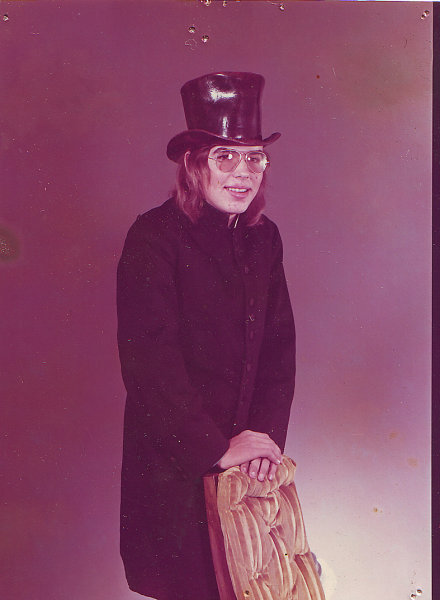
I don’t know what he thought about. He didn’t tell me. It was his senior year of high school. He was a nonconformist. He wore a leather top hat and drew cartoons. He had a few friends who could appreciate his trouble-making sense of humor but I imagine he felt the pain of not fitting in.

He would start college soon and never finish. He would start drugs soon and never stop.

But I didn’t know that then. I only thought about going places with my strong brother. I felt like we could go anywhere with the motorcycle as our steed to take us.

The gleaming valley under the stars beckoned us with its brightness.

My brother turned and smiled down at me.

He still had hope in his heart then.